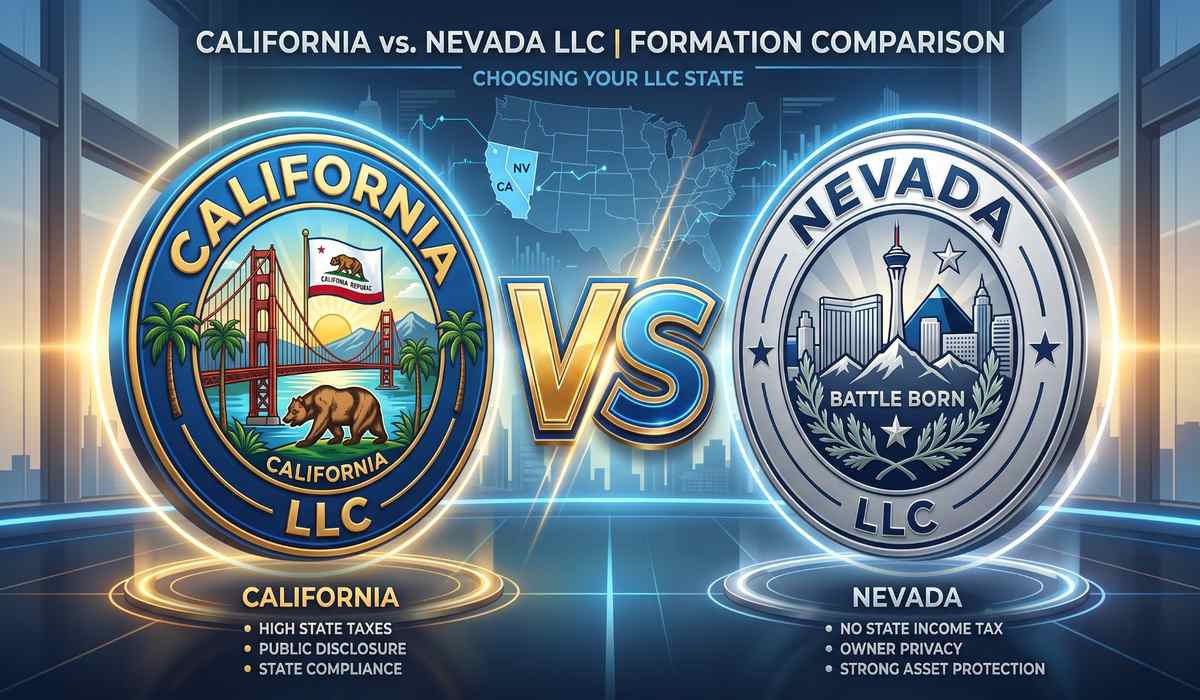
If you run your business from California, forming a Nevada LLC usually does not remove your California filing and tax obligations. California can still require the Nevada company to register there and pay its annual LLC tax. If you live and operate in Nevada, a Nevada LLC may be simpler and less expensive to maintain. Your actual work location matters more than the address on your formation papers.
A remote business needs the same careful check. Selling online does not mean the business has no home state. The owner’s home office, employees, inventory, and work in another state can all affect registration and taxes. This guide compares the state filing costs, annual rules, tax treatment, privacy, and practical choices for both states.
California vs Nevada LLC at a Glance
California has a lower state formation filing fee. Nevada has a higher combined starting cost but no individual state income tax. Each state also asks LLCs to make follow-up filings after formation.
| Factor | California LLC | Nevada LLC |
|---|---|---|
| Articles of Organization | $70 | $75 |
| Other required initial state filings | $20 Statement of Information, due within 90 days | $150 initial list and $200 state business license in the standard case |
| Typical combined starting state fees | $90, excluding annual LLC tax | $425, assuming no license exemption |
| Recurring state filings | $20 Statement of Information every two years | $150 annual list and $200 business license renewal in the standard case |
| Annual LLC tax | Generally $800 for an LLC organized or doing business in California | No comparable $800 California LLC tax |
| Individual state income tax | California taxes applicable individual income | Nevada does not levy individual state income tax |
| Practical fit | Business managed or operated in California | Business genuinely managed or operated in Nevada |
These figures cover the stated filings, not registered agent services, local permits, other taxes, or optional expedited processing. The California Secretary of State lists the $70 Articles fee and $20 Statement of Information; Nevada law lists a $150 LLC annual list fee, and the Nevada Secretary of State lists a $200 business license renewal for most noncorporate entities.
What Is a California LLC?
A California LLC is a limited liability company formed with the California Secretary of State. Its members own the company. One of the primary benefits is that the LLC generally separates business debts from the members’ personal obligations, subject to the facts and applicable law. Federal tax treatment depends on the number of members and any tax election; an LLC is not automatically taxed in one fixed way.
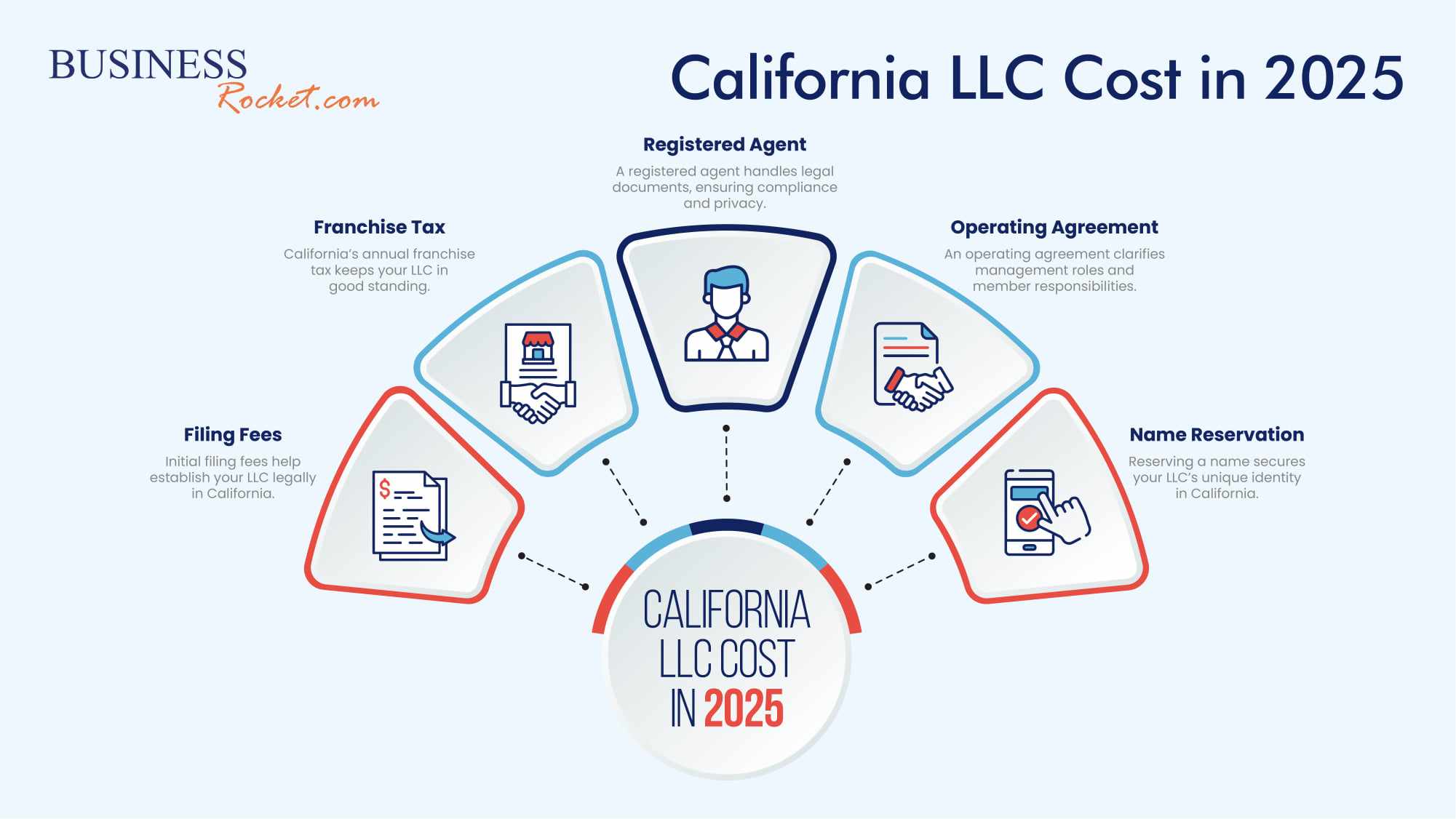
To create it, you file Articles of Organization for $70 and name an agent for service of process. You then file a $20 Statement of Information within 90 days and every two years after that. California generally charges an $800 annual LLC tax if the LLC is organized or doing business there.
When a California LLC Makes Sense
A California LLC usually makes sense when you manage the company from California, keep its office there, or conduct business there. Forming locally avoids maintaining a separate Nevada entity and then registering that same entity in California as a foreign LLC.
A California customer base alone does not decide every registration question. How and where the company works matters. Still, an owner who regularly runs the business from a California home office should assess California requirements before assuming an out-of-state filing will save money.
What Is a Nevada LLC?
A Nevada LLC is a limited liability company formed with the Nevada Secretary of State. The standard initial state cost totals $425: $75 for Articles of Organization, $150 for the initial list, and $200 for the state business license. The usual recurring state cost is $350 for the annual list and license renewal, assuming no exemption applies.
Nevada does not levy individual state income tax. It also has LLC laws that can protect a member’s interest against certain personal creditors. Those features may matter to a business genuinely operated from Nevada. They do not prevent another state from applying its own registration, tax, or reporting rules to activity within that state.
How Much Privacy Does Nevada Provide?
Nevada’s filings do not necessarily identify every passive LLC member, but its initial and annual lists identify managers or managing members. Calling a Nevada LLC completely anonymous would therefore mislead readers. Other records, including filings in a second state, may disclose additional names or addresses.
Privacy also differs from tax compliance. A company can have limited information in a public state search and still need to provide information to banks or government agencies. Check the actual filing fields before choosing Nevada for privacy.
First-Year and Ongoing Costs
The Articles fee alone does not show what it costs to get started. California requires an initial Statement of Information. Nevada ordinarily requires an initial list and business license alongside the Articles. California’s annual tax is a separate obligation from its Secretary of State filing fees.
| State cost | California | Nevada |
|---|---|---|
| Articles of Organization | $70 | $75 |
| Initial statement or list | $20 | $150 |
| Initial state business license | Not part of this statewide LLC filing comparison | $200 in the standard case |
| Combined initial state filings | $90 | $425 |
| Annual LLC tax | Generally $800 | No equivalent California LLC tax |
| Later recurring statement, list, or license | $20 every two years | Generally $350 each year |
For a California LLC, the $90 initial filing total does not include the $800 annual tax. For Nevada, the $425 starting total already includes its first initial list and state business license; do not add the $350 renewal to that same initial filing total. These examples exclude agent charges and other possible taxes.
How Do California and Nevada Tax LLCs?
California generally requires an LLC organized or doing business there to pay an $800 annual tax, even when it earns no profit. An additional LLC fee may apply when its total California income reaches $250,000. For $250,000 to $499,999 in California income, the published fee is $900, with higher amounts at higher income levels.
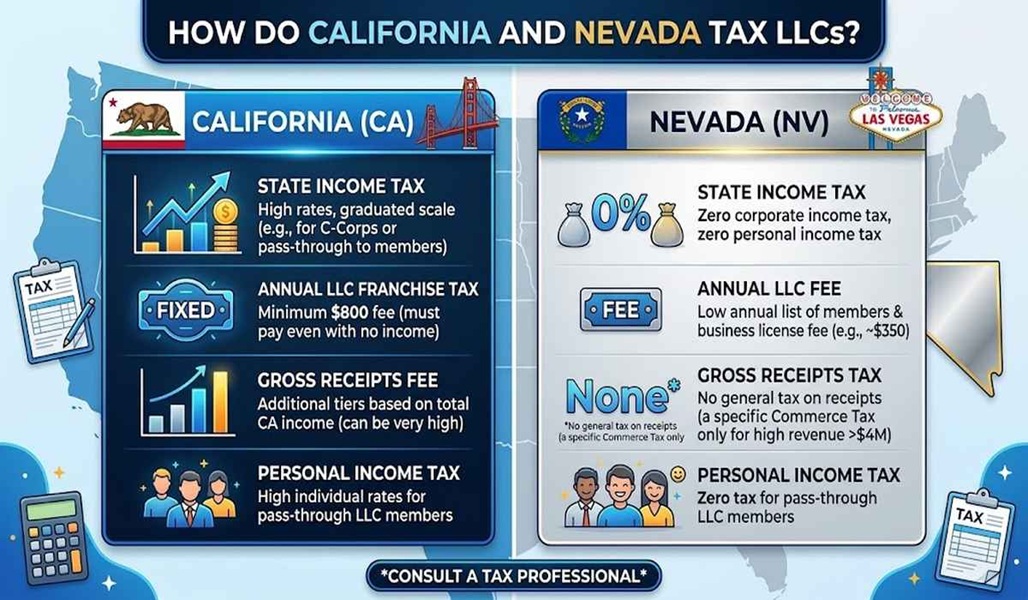
That LLC fee is separate from income tax paid by an owner or entity under its tax classification. The article’s earlier phrase “California LLCs pay income tax up to 13.3%” was too broad: an individual rate does not describe every LLC’s tax bill. Federal taxation also depends on whether the LLC is disregarded, taxed as a partnership, or elects corporate treatment.
Nevada does not impose an individual state income tax, but “no income tax” does not mean no taxes. Federal taxes still apply, and Nevada or another state may impose taxes or obligations based on the company’s activity. The correct comparison follows where income is earned, where work happens, and how the LLC is taxed, rather than treating the state of formation as the only factor.
Is California’s $800 Tax Due in the First Year?
For an LLC formed in 2026, do not assume the earlier temporary first-year waiver still applies. The Franchise Tax Board says an LLC organized or doing business in California generally owes the $800 annual tax. Its instructions also describe narrow exceptions, including certain short tax years and qualifying short-lived LLCs; check the facts before applying an exception.
Can a California Owner Save Tax by Forming in Nevada?
Usually not when the owner actually runs the company from California. A Nevada LLC conducting business in California may need to register there as a foreign LLC. California’s tax rules can then apply despite the Nevada formation paperwork. The company also keeps its Nevada filing and renewal obligations.
Consider a consultant who lives and works in Los Angeles but files Nevada Articles. The Nevada document does not move the consultant’s work to Nevada. The relevant question is where the person manages and conducts the business. California’s Franchise Tax Board says LLCs organized, registered, or doing business in California can be subject to its annual tax.
What Is Foreign LLC Registration?
“Foreign” means the LLC was formed under another state’s law. It does not mean the company is outside the United States. If a Nevada LLC must qualify to do business in California, it files an application with the California Secretary of State and follows California’s applicable filing and tax rules.
Registration in a second state adds administration. The Nevada LLC still has Nevada list and license obligations, while California can require its own statements and payments. Whether a particular activity requires qualification depends on its facts; occasional customers in another state are not the same as operating an office there.
Which State Fits an Online Business?
An online store or service business still has people and operations somewhere. An owner who manages orders from a California home office should evaluate California rules. A company with staff, an office, or inventory in another state should evaluate that state’s rules too. The website being available nationwide does not establish Nevada as the company’s home state.
A Nevada resident operating an online business from Nevada has a clearer reason to choose a Nevada LLC. A founder living outside the United States should look at the actual US activity, customers, employees, inventory, and tax obligations before picking a state. State formation alone does not decide the federal tax result.
Privacy and Asset Protection
Both states provide an LLC structure that can separate a company’s liabilities from its members, subject to ordinary legal limits. Nevada’s charging-order rules may offer stronger protection for a member’s LLC interest against certain personal judgment creditors. A charging order generally reaches distributions otherwise payable to that member; it is not blanket immunity from lawsuits or a way to avoid the LLC’s own debts.
California has its own charging-order provisions and can permit foreclosure of a debtor’s transferable interest under applicable conditions. Those legal differences can matter in an asset-protection plan, but a Nevada filing alone does not ensure that every dispute involving a California-based owner follows Nevada law. Get case-specific advice before treating this feature as the deciding factor.
A revocable trust may help with estate planning, but transferring an LLC interest to one does not generally erase the owner’s state tax obligations. Trusts also have separate rules and costs. They should not be presented as a simple LLC privacy or tax shortcut.
How Do You Form the LLC?
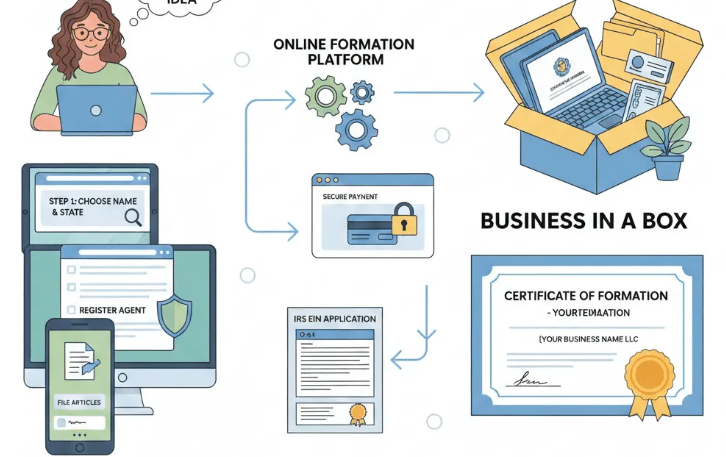
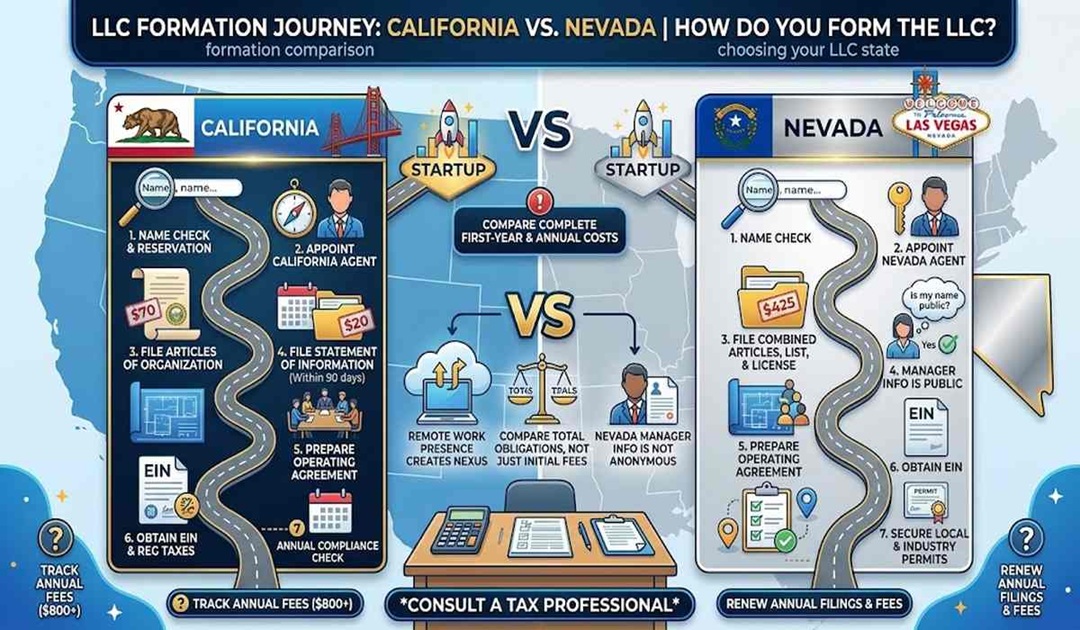
The practical steps are similar in both states: choose an available name, designate the required in-state agent, file the Articles, document how the LLC will operate, and handle tax registration or an EIN when needed. The follow-up state forms and costs differ.
California Formation Steps
- Check the proposed LLC name with the California Secretary of State.
- Choose an agent for service of process in California.
- File Articles of Organization and pay the $70 state fee.
- File the $20 Statement of Information within 90 days.
- Prepare an operating agreement and obtain an EIN if the business needs one.
- Track the annual LLC tax, any additional LLC fee, and biennial statement deadlines.
Name the agent in the formation filing; appointing one only after filing reverses the actual sequence. California does not file your operating agreement with the Secretary of State.
Nevada Formation Steps
- Check the proposed LLC name with the Nevada Secretary of State.
- Appoint a Nevada registered agent.
- File Articles of Organization and the initial list.
- Complete the state business license filing or establish an applicable exemption.
- Prepare an operating agreement and obtain an EIN if needed.
- Renew the annual list and business license when due.
The standard starting state fees total $425. Check industry and local license requirements separately; the statewide license is not necessarily the only permit a business needs.
Common Mistakes to Avoid
The first mistake is comparing only the $70 California Articles fee with Nevada’s $425 combined filing total. Those figures cover different sets of documents. Compare the complete first-year obligations and then compare later annual costs separately.
The second mistake is treating a remote company as if it exists in no state. The owner’s work location, staff, inventory, and offices may each create state obligations. The third is calling Nevada ownership anonymous even though a manager or managing member may appear on state filings.
California vs Nevada LLC FAQs
Is Nevada cheaper than California for an LLC?
Nevada’s standard initial state filings cost $425, while California’s Articles and initial Statement of Information total $90 before the California annual LLC tax. Nevada’s usual list and license renewals total $350 a year. The cheaper choice depends on where the business actually operates and whether a second-state registration is required.
Can a California resident form a Nevada LLC?
Yes. A California resident can form a Nevada LLC. If that person conducts business from California, however, the Nevada filing may not remove California registration and tax obligations. The work location matters more than the state printed on the Articles.
Does a Nevada LLC avoid California’s $800 annual tax?
A Nevada LLC may still owe California’s annual LLC tax if it is registered or doing business in California. Forming it in Nevada does not by itself create a California tax exemption. Review the business’s actual activities before estimating savings.
What does a California LLC cost to start?
The Articles cost $70. The initial Statement of Information costs $20 and is due within 90 days. That makes $90 in these two starting state filings, before California’s generally applicable $800 annual LLC tax and other possible costs.
What does a Nevada LLC cost to start?
The ordinary combined state total is $425: $75 for the Articles, $150 for the initial list, and $200 for the state business license. A registered agent, special permit, or optional service may add cost. A license exemption can change the total if the company qualifies.
Does Nevada list LLC owners publicly?
Nevada’s required lists identify managers or managing members. They do not necessarily list every passive member. Public visibility depends on the company’s management structure and any other required filings, including filings in another state.
Is an online LLC automatically based in Nevada?
No. A website has no fixed state, but its owner and operations do. If the owner manages it from California or keeps people or inventory there, California rules may apply even when the LLC was formed elsewhere.
Do both states require a registered agent?
Yes. California requires an agent for service of process, and Nevada requires a registered agent. The person or service must meet the relevant state’s requirements for receiving official papers. An owner with filings in both states may need an appropriate agent in each.
Does an LLC automatically pay pass-through taxes?
No. An LLC’s federal classification depends on its members and elections. A single-member LLC is generally disregarded by default, while a multi-member LLC is generally taxed as a partnership by default; eligible LLCs can elect corporate treatment. State obligations must be considered separately.
Can a non-US resident form a Nevada or California LLC?
Generally, non-US residence alone does not prevent LLC ownership. The founder still needs to meet state filing and registered agent rules and consider federal reporting, tax classification, and where US business activity occurs. Nevada’s lack of individual income tax does not settle a nonresident’s federal tax position.
Which State Should You Choose?
Choose California when you actually manage or operate the company from California. Its $70 Articles fee and $20 initial statement are lower than Nevada’s standard $425 starting fees, and filing in Nevada generally does not eliminate California obligations for a California business.
Choose Nevada when you genuinely manage and operate the business there and its state rules fit your needs. If your company works in both states, assess both states’ registration and tax rules before filing. This gives you a realistic cost comparison based on the business you run, rather than a promise attached to one state’s name.