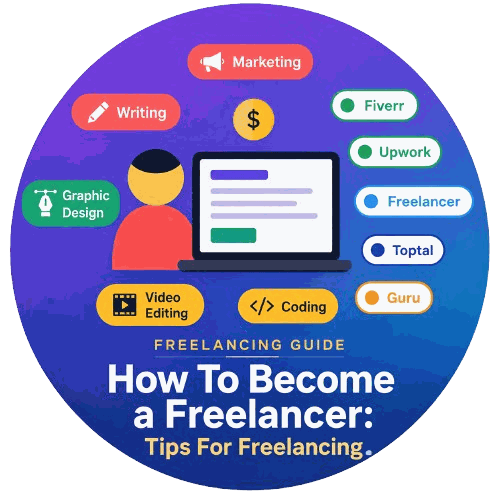
How to Become a Freelancing | 2026Step-by-Step Guide
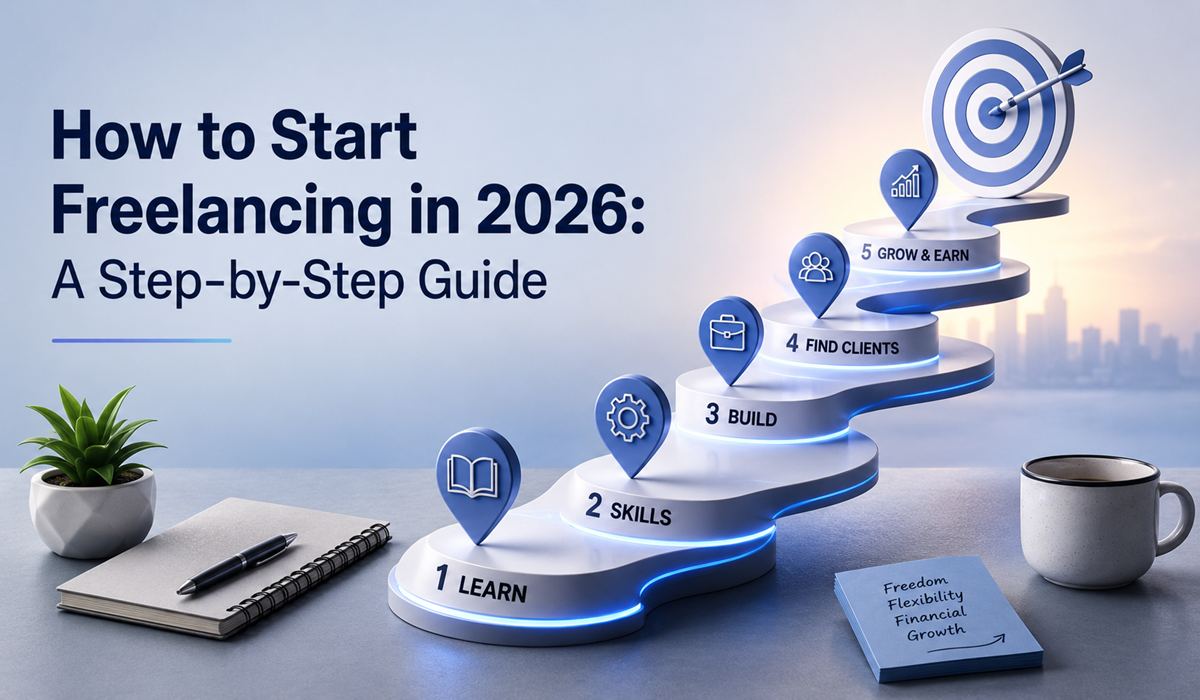
| Freelancing Starting Steps | |
|---|---|
| • | Pick One Skill to Sell |
| • | Build a Tiny Portfolio |
| • | Write a One-Sentence Offer |
| • | Choose Your First Platform |
| • | Set Up a Profile That Wins Trust |
| • | Set Your First Rates |
| • | Land Your First Client |
| • | Deliver Great Work and Get Reviews |
| • | Raise Your Rates and Find Better Clients |
So you are thinking about freelancing. In plain terms, that means you sell one skill to clients, job by job, rather than punching in for one boss every week.
And most folks get stuck on the wrong worry. Being the best in your field is not what gets you paid. What gets you paid is choosing a single skill, proving you can actually do it, then landing in front of people who need it. Everything below walks you through exactly that, in the order you will hit it.
| Question | Short answer |
|---|---|
| Do I need experience? | No. You need proof you can do the work |
| How much can I earn? | Often $20 to $40 an hour at first, more with reviews |
| First client, how long? | Usually 30 to 60 days if you put in real work |
| Where do I start? | One skill. One small portfolio. One platform |
Step 1: Pick One Skill to Sell
Start here. And most beginners mess this up by trying to sell everything.
Do not be the profile that lists writer, designer, editor, and assistant in one breath. A buyer reads that and quietly assumes you are average at all four. So pick one lane. Writing, design, video editing, web dev, whatever you can do now or learn quick. Sure, web dev and copywriting and design and video are all in demand this year. But forget what pays most for a second. Your first skill should be the one you can hand over today, not the one that reads well on a profile.
Step 2: Build a Tiny Portfolio
Now the classic trap. Clients want proof you can do the work. But you have no clients yet, so no proof. So what do you do? You make the proof yourself.
You do not need paid jobs to show a skill. Make two or three samples on your own. A writer writes three articles. A designer makes a few logos. An editor cuts a short reel. These samples do one thing. They show a client what you can do before they spend a rupee on you. Proof beats a job history here, every time.
Step 3: Write a One-Sentence Offer
Before you sign up anywhere, know what you sell. Not a long bio. One sharp line.
Say it like “I write clear, SEO-friendly blog posts for small business sites.” That is the whole thing. Why does this even matter? Picture a client flicking through twenty profiles before their coffee goes cold. The one that is easy to grasp gets the click. A woolly “I do all kinds of creative stuff” just gets scrolled past. Narrow it down and you become the easy yes.
Step 4: Choose Your First Platform
This is where your first clients are. You only need one platform to start. Do not sign up for five.
Most beginners pick between Fiverr and Upwork. They work differently.
Fiverr – You list a service, clients come to you. Easiest start, no proposals, live in under an hour.
Upwork – You find job posts and send proposals. More work, but usually bigger, longer jobs.
Simple call – Fiverr if you want clients to find you. Upwork if you do not mind writing proposals for bigger money. Pick one. Add a second later.
Step 5: Set Up a Profile That Wins Trust
Your profile is your shop window. A nervous first-time buyer decides in seconds. So do not blow that moment on a life story nobody reads.
Clear photo. Open with your one-line offer. Drop in your samples. And keep the bio tight, aimed at the client instead of your own backstory. A popular job can draw anywhere from fifteen to forty proposals, so being sharp matters way more than being long. Speak to what the client is stuck on. Nobody hires you for your life story.
Step 6: Set Your First Rates
Pricing scares almost everyone. The urge is to go super cheap to win that first job. Do not.
Price yourself too low and you tend to attract headache clients, then run out of steam. A lot of newcomers land near $20 to $40 an hour, but that moves around depending on your skill and where you work. Over on Fiverr, plenty kick off with little gigs in the $15 to $40 zone and creep upward as the reviews pile in. Here is the move. Begin at a fair number, collect a couple of glowing reviews, then nudge the price up. Your opening job earns proof, not a fortune.
Step 7: Land Your First Client
Hardest part. No point pretending otherwise. Nobody knows you, no reviews to show. So you go get that first client instead of waiting.
Apply fast. Replying in the first thirty minutes of a job post really does lift your odds. Personalize each message. Name the client’s actual project. Skip the copy-paste stuff everyone sends. Tell your own circle too, because that first client is sometimes just someone who already knows you. Get the first few, bank the reviews, and it all gets easier.
Step 8: Deliver Great Work and Get Reviews
Your first reviews are worth more than the cash those first jobs pay. They are the proof that talks the next client into hiring you.
So go above and beyond on those opening gigs. Beat the deadline. Keep the client in the loop. Be the person who is easy to work with. Then, when someone is clearly pleased, just ask them to leave a review. Bit by bit, that is how a nobody freelancer becomes a fully booked one. Client by client.
Step 9: Raise Your Rates and Find Better Clients
Once reviews come in and your week fills up, things shift. Now you stop grabbing any job and start picking the good ones. This is the part a normal job rarely lets you do.
Raise your prices as the reviews stack up, since proof is what earns you the right to charge more. Watch which projects light you up and which ones leave you flat. Slowly let the draining ones go and steer toward the work you genuinely like. And once the trust is there, shift your best clients over to direct billing so you are not handing a cut to the platform forever.
How Much Money Do You Need to Start Freelancing?

Next to nothing, and honestly that is the beauty of it. Where most businesses want a pile of cash up front, freelancing does not. If you own a laptop and have a connection, you are pretty much good to go.
What you spend is time. Hours on your samples, your profile, those first messages. So no, money is not the barrier. A skill, some patience, and the will to work before the money shows up. That is the barrier.
How Long Does It Take to Make Money Freelancing?
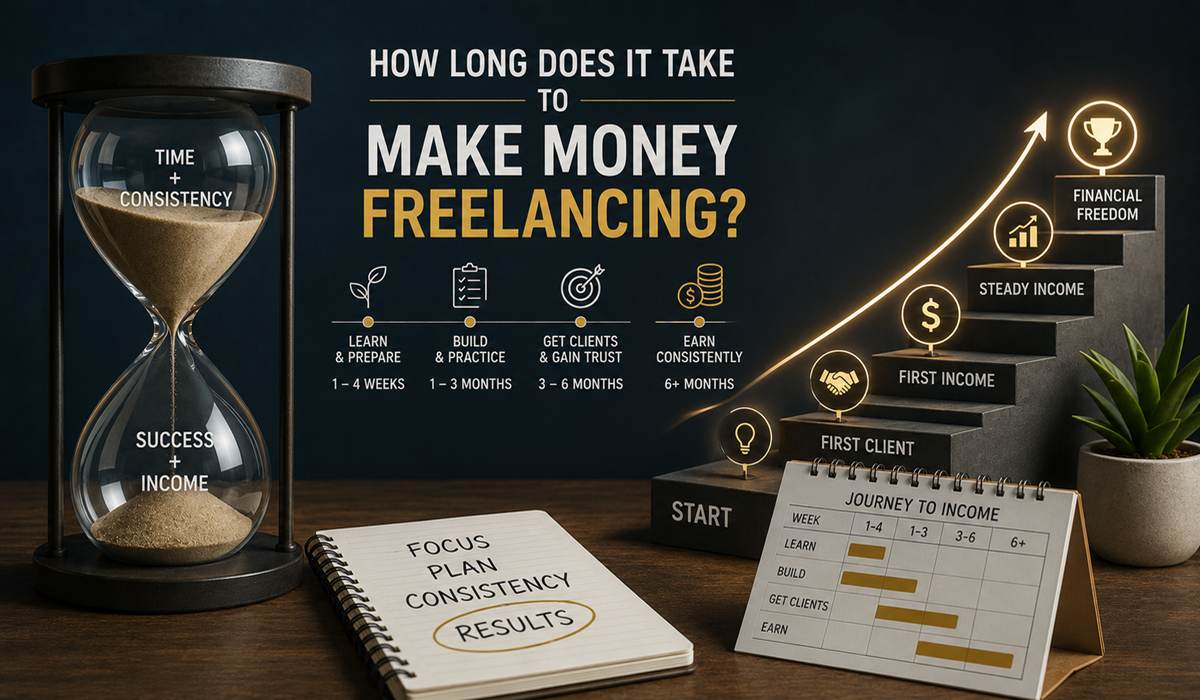
Most beginners get their first client inside thirty to sixty days of real effort. Slow at first, then it picks up fast once you have five clients and a few reviews behind you.
Do not judge the whole thing by a quiet first month. Early on you are building proof, not a paycheck. The ones who make it just kept going after the rejections. That is the only real difference.
A Quick Note on Freelance Taxes
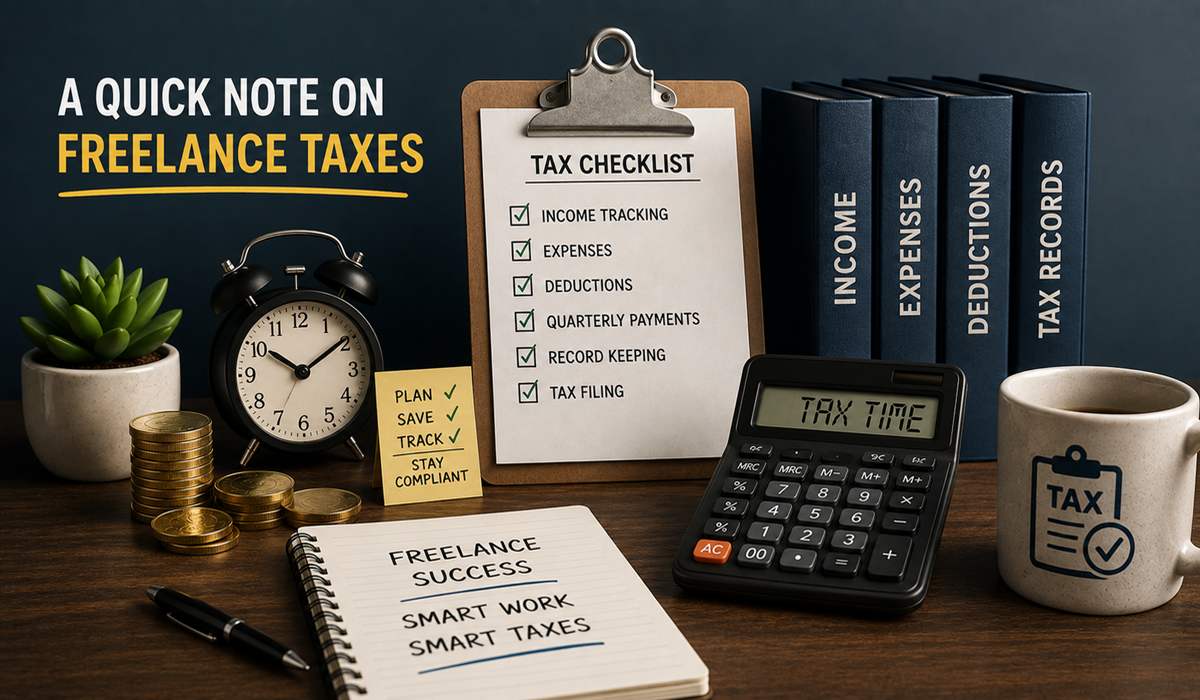
One thing new freelancers forget until it bites. Taxes. No employer is withholding anything for you now, so that job is yours.
In the US, the moment your net freelance income passes $400 for the year, self-employment tax usually kicks in, and any platform that pays you more than $600 mails out a 1099. A safe habit is to tuck away somewhere around 25 to 30% of what you bring in, particularly that first year. Every country runs its own rules, so double-check yours. Still, holding back a slice of each payment spares you a nasty jolt down the line.
Common Freelancing Mistakes to Avoid
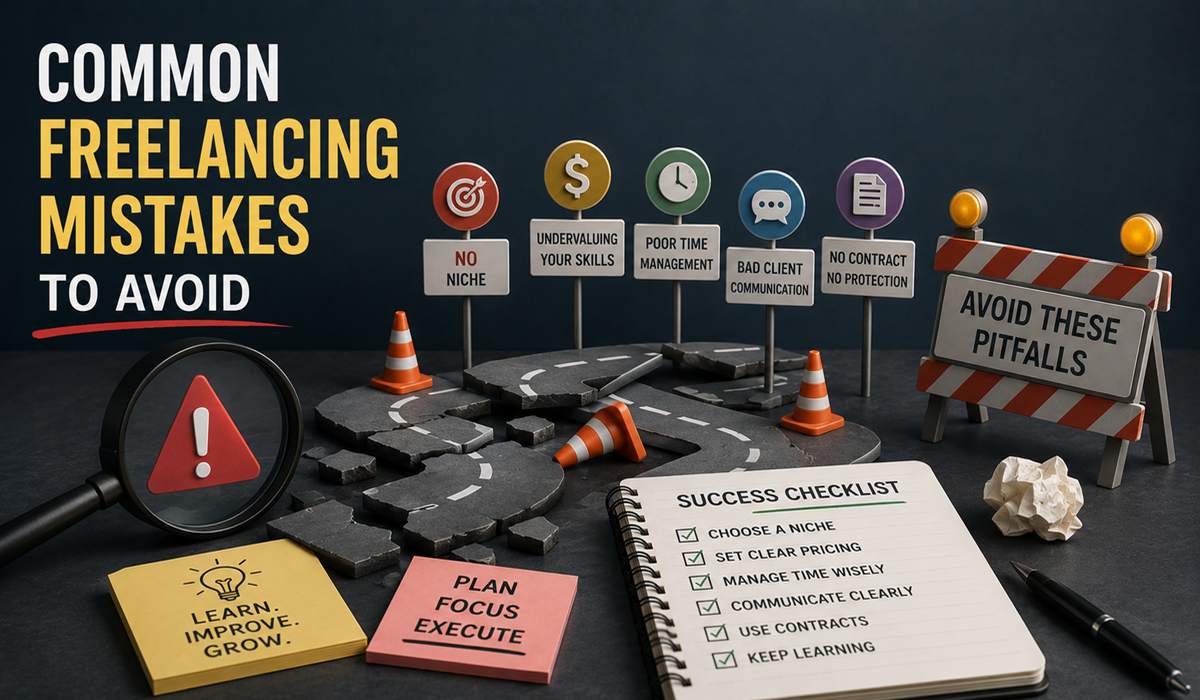
Almost every beginner trips on the same few things. So here they are first.
- Cramming in a bunch of unrelated services rather than one clear skill.
- Firing off the same recycled proposal at every single job.
- Setting prices so low that headache clients show up and you burn out.
- Agonizing over which platform wins instead of sharpening your profile.
- Walking away after a handful of no’s, usually right before it clicks.
Any one of these on its own will not end you. Sidestep them, though, and you spare yourself weeks of spinning your wheels.
Your Freelancing Launch Checklist
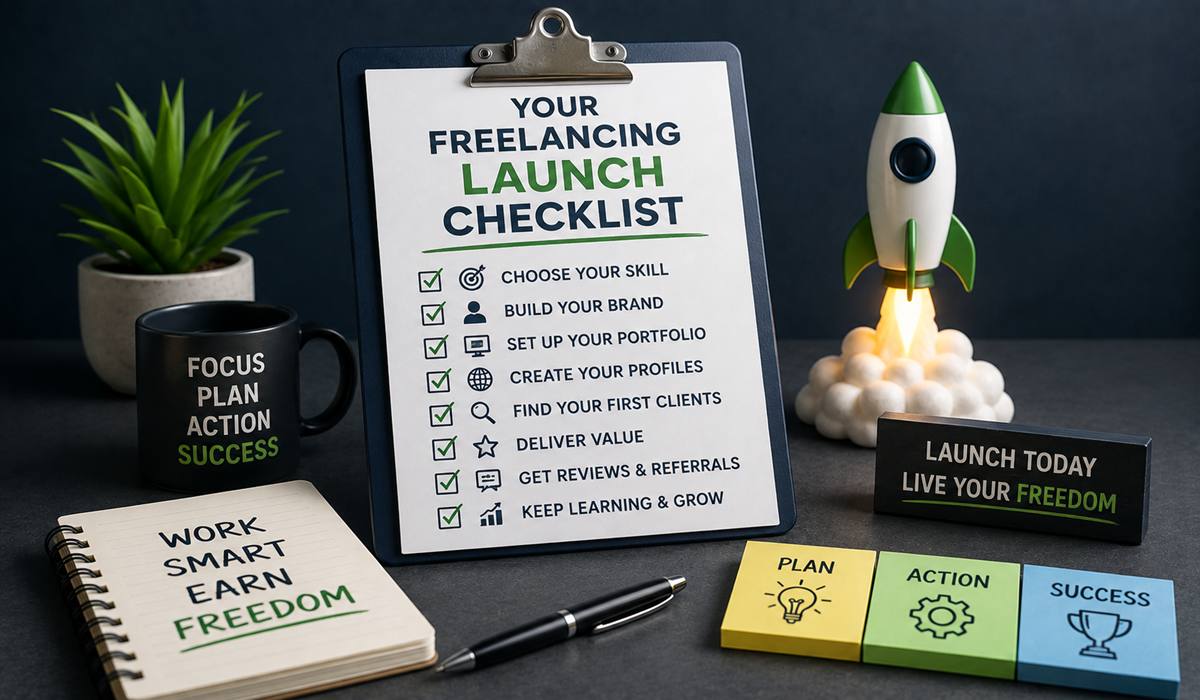
Here is everything above, shrunk to a list. Work through it top to bottom and you move from idea to that first paid job.
- Settle on one skill you can sell.
- Put together two or three samples.
- Nail down a clear one-sentence offer.
- Land on a single platform for now.
- Build a sharp profile that earns trust.
- Price yourself at a fair starting rate.
- Move fast and tailor every message.
- Do great work, then gather the reviews.
- Lift your rates as the proof piles up.
Frequently Asked Questions
Can I start freelancing with no experience?
Yes, and honestly that is how most people begin. A job history is not the requirement. Proof that you can actually do the work is. Make two or three samples on your own, and clients weigh you on those, never a resume.
What is the best freelancing skill for beginners?
Whichever one you can deliver today. Writing, design, video editing, and web dev all move steadily, but your best opening skill is the one you can prove right now, not the one that sounds impressive at a party.
Which freelancing platform is best for beginners?
For a total beginner, Fiverr is usually the easier door. You put up a service and buyers reach out to you, so there are no proposals to grind through. Upwork is more work up front, but the jobs there often run bigger and last longer. My advice: get comfortable on one first, and only add the second once you have a few reviews.
How much should I charge when starting out?
For most new freelancers it falls between $20 and $40 an hour, but your skill and the platform you pick will move that number. My honest tip is to start at a rate that feels fair, build up a few good reviews, and then raise it. If you drop your price way down just to win that very first client, it tends to hurt you later.
Is freelancing worth it?
For many people it is, yes. The income is shaky in the beginning, no denying that. But as you gather repeat clients and a couple of income sources, it evens out. And quite a few people who quit their nine-to-five actually end up making more once they settle into it.
Final Thoughts
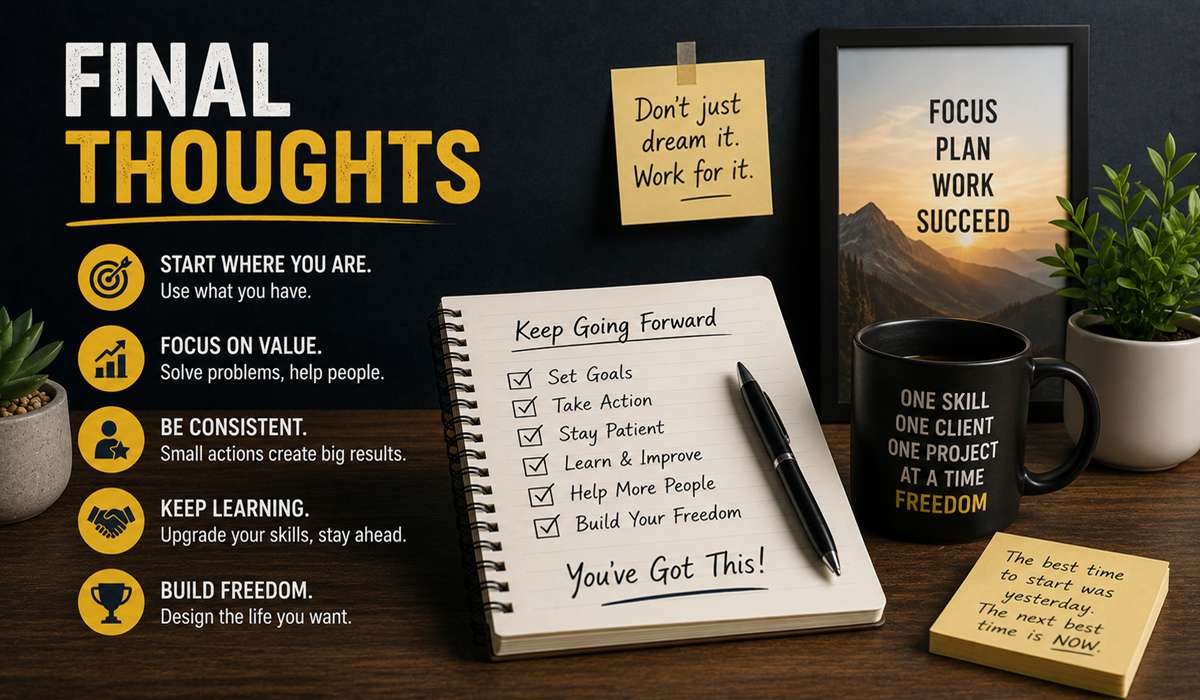
Boiled down, the start is just a few steps. Choose one skill. Build a small portfolio to back it up. Set up on a single platform. Then go win those first clients. Handle them one after another and it never feels like too much at once.
There is no experience needed, no big money needed, and nobody whose permission you have to ask. You just need one skill people will pay for, plus the patience to sit through the quiet early days. Win the first client. Earn the first review. Then let it grow from there. And really, the best day to begin is today, using whatever skill you already have.
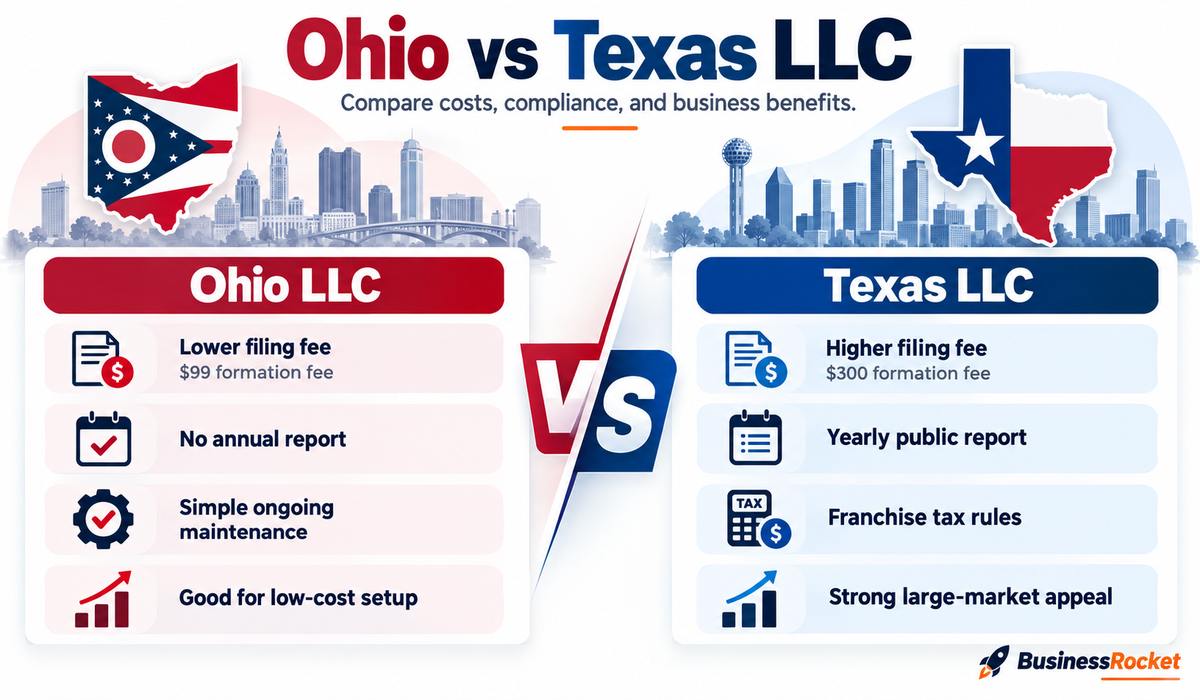 Texas vs Ohio LLC October 3, 2026
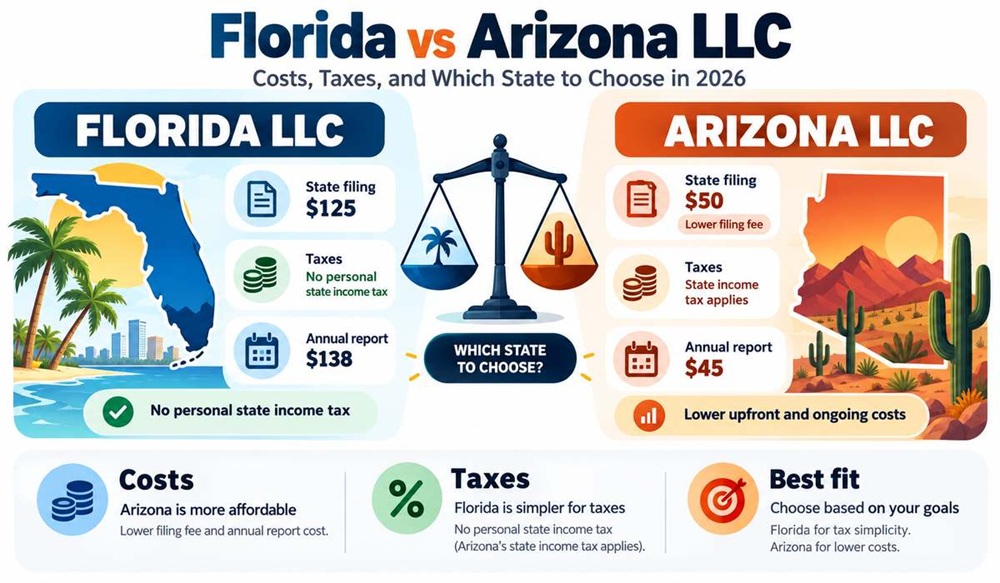 Florida vs Arizona LLC – What’s the Difference September 26, 2026
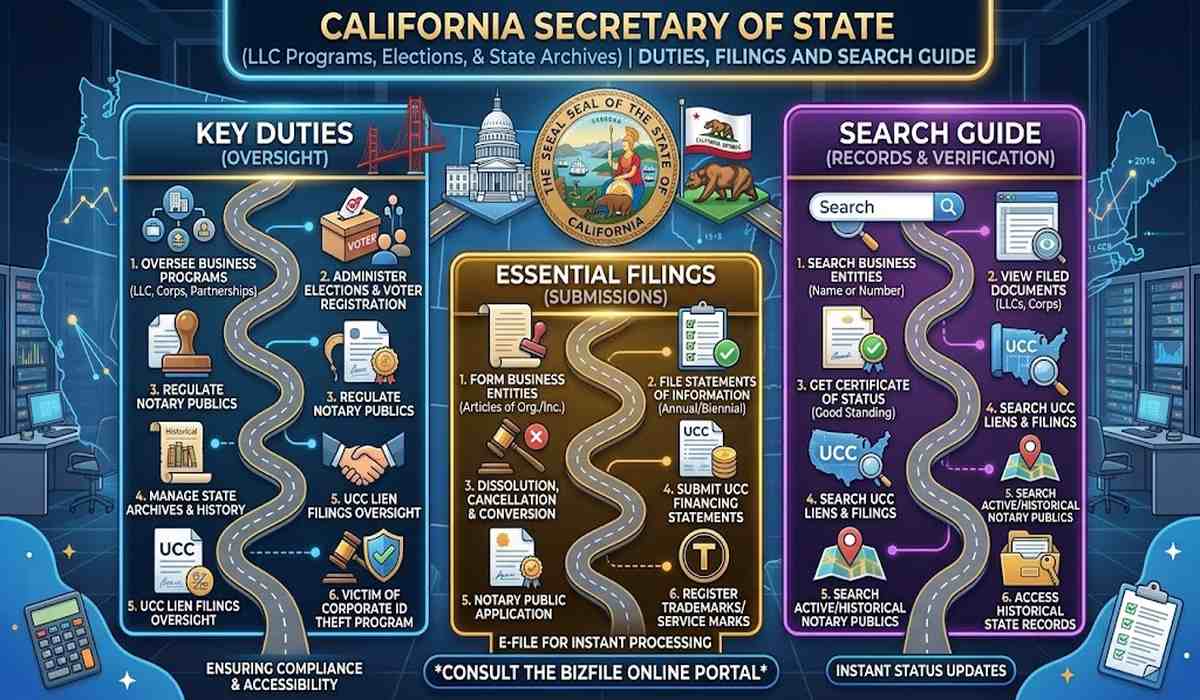 What Is the California Secretary of State? September 25, 2026