Texas vs Ohio LLC: Costs, Taxes, and Which State to Choose
An Ohio LLC has a $99 formation fee and no annual report fee. A Texas LLC has a $300 formation fee and requires a Public Information Report each year.
Start Your Business Today

LLC Cost Comparison Calculator
Texas is the pick if you want a big, no-income-tax economy behind you. Ohio wins if you just want the cheapest, lowest-maintenance LLC you can get. But here’s what most guides skip. The smartest move often has little to do with the state’s fees at all. It’s about matching the LLC to where your business actually operates.
At a Glance
- Cheaper to form Ohio ($99) vs Texas ($300).
- State income tax Neither state charges it.
- Annual report Neither requires one.
- Watch out for Ohio’s Commercial Activity Tax on revenue and Texas’s franchise tax above $2.47 million.
- Best rule Match the LLC to where your business actually runs.
Texas vs Ohio LLC Full Comparison
The two states split on what you pay to start, what you pay in tax, and what you keep paying each year. Here’s how they stack up side by side.
| Factor | Texas LLC | Ohio LLC |
|---|---|---|
| State filing fee | $300 ($0 for veterans) | $99 |
| Formation document | Certificate of Formation (Form 205) | Articles of Organization (Form 610) |
| Annual report | None (franchise tax report only) | None |
| State income tax | 0% | 0% on pass-through income |
| Other business tax | Franchise tax above $2.47 million revenue | Commercial Activity Tax on gross receipts above threshold |
| Agent name | Registered agent | Statutory agent |
| Processing time | 5 to 7 business days online | 3 to 5 business days online |
| Estimated first-year total | $400 to $500 | $150 to $250 |
Texas LLC Pros and Cons
A Texas LLC starts with the Certificate of Formation (Form 205), filed with the Texas Secretary of State for $300. What draws people in is the second-largest economy in the country paired with no personal income tax.
- Big market A huge customer base behind you.
- No income tax Nothing on personal or pass-through income.
- Veteran perk Veterans pay a $0 filing fee.
The catch is that the $300 fee is on the higher end, and a franchise (margin) tax of 0.375 to 0.75 percent applies once revenue passes $2.47 million. Most small LLCs never reach it.
Ohio LLC Pros and Cons
An Ohio LLC begins with the Articles of Organization (Form 610), filed with the Ohio Secretary of State for $99. It is one of the cheapest states to start in, with no yearly paperwork to chase.
- Cheap to start The $99 fee sits well under the national average.
- Nothing yearly No annual report and no ongoing state fee for most owners.
- No income tax No income tax on pass-through LLC income.
The catch is that the Commercial Activity Tax (CAT) hits gross receipts above the state threshold. Because it taxes revenue, not profit, a high-revenue, low-margin business can owe it even in a lean year.
How the Taxes Differ
Neither state touches your pass-through income, but each has a business-level tax waiting in the background. The real difference is the trigger. Ohio’s CAT is tied to total revenue, while Texas sets a much higher bar before anything is owed.
- Texas franchise tax Only above $2.47 million in annualized revenue. Below that you owe $0, though you still file a franchise and Public Information Report.
- Ohio CAT Charged on gross receipts over the state threshold, regardless of profit.
Does Forming Out of State Save Money?
Short answer, no. If you live and run your business in one state, forming your LLC in the other won’t cut your costs. Your home state still makes you register that out-of-state LLC as a foreign LLC and pay its fees and taxes. Chasing a cheaper state usually just stacks a second registration on top of your first, which costs more, not less.
Which State Should You Choose?
Match the LLC to your actual base of operations. A local setup keeps your filing, tax, and registration all in one place instead of spread across two states.
Quick Decision Guide
- Based in Texas? Form a Texas LLC, especially if you expect high revenue or you’re a veteran.
- Based in Ohio? Form an Ohio LLC for the lowest cost and least upkeep.
- Fully online, no fixed location? Ohio is cheaper to maintain. Texas rewards higher earners with no income tax.
How to Form Your LLC in Either State
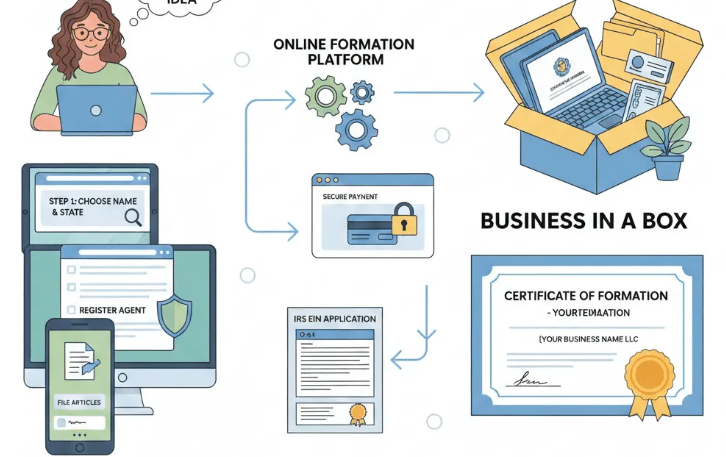
The steps look about the same in both states. Only the forms and prices change. In both, you name an agent, draft an operating agreement, and get an EIN from the IRS.
- Texas File Form 205, pay the state fee, then keep up with the annual franchise and Public Information Report.
- Ohio File Form 610 and pay the fee. No annual report is required after formation.
One naming note. Texas calls the required contact a registered agent and Ohio calls it a statutory agent, but the role is identical. The agent needs a real in-state address and must be available during business hours to accept legal mail.
Key Takeaways
- Ohio is cheaper to form ($99) and maintain. Texas costs more upfront ($300) but suits higher earners.
- Neither state taxes pass-through income or requires an annual report.
- Texas taxes revenue only above $2.47 million. Ohio’s CAT applies to gross receipts above its threshold.
- Keep the LLC in your base state to avoid paying twice.
Texas vs Ohio LLC FAQs
Is Ohio or Texas cheaper for an LLC?
Ohio, to start. Its filing fee is a fraction of Texas’s. Over time it stays cheaper on state fees, though Texas can save high earners more overall thanks to no income tax.
Does Texas have an annual LLC fee?
No separate fee. Texas LLCs file a franchise tax report, but most owe $0 because revenue is below $2.47 million.
Does Ohio have an annual LLC fee?
None. After the one-time $99 filing, most Ohio LLCs pay the state nothing each year.
What is the Ohio Commercial Activity Tax?
It’s a tax on business gross receipts above the state threshold. It is tied to revenue, not profit, so thin-margin businesses can still owe it.
Can I form a Texas LLC if I live in Ohio?
You can, but it rarely saves money. Operating from Ohio means registering the Texas LLC as a foreign LLC there and following Ohio’s rules anyway.
Which is best, Texas or Ohio?
Usually your home base. Pick Texas for a large, no-income-tax market, or Ohio for the lowest cost and upkeep.