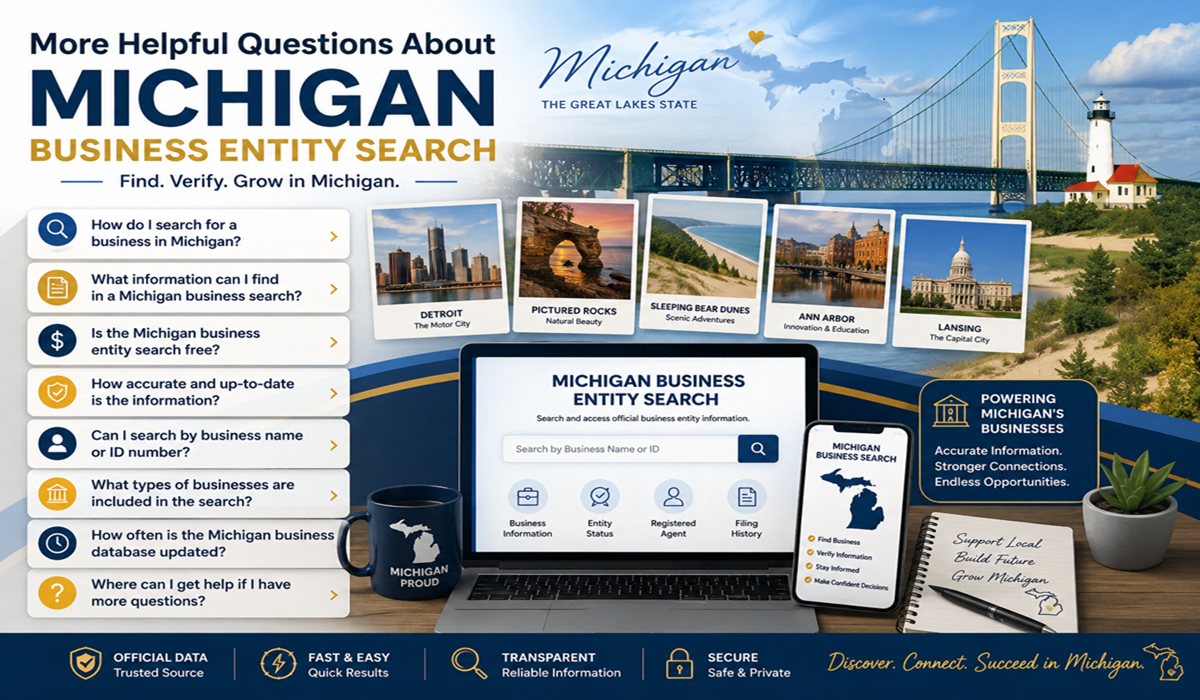
More Helpful Questions About Michigan Business Entity Search
No, you do not need to look elsewhere for answers because this page contains every important detail about the Michigan business entity search process to help you stay compliant.
Start Your Business Today


1. Search Basics and Naming Questions
1. How do I accurately perform a Michigan Business Entity Search?
Look, if you want to do this right, you’ve got to head over to the official LARA Corporations Division site. A quick tip from someone who’s done this a thousand times: just type in the main part of the name you want and leave out things like "LLC" or "Corp." This gives you a much better look at any similar names that might cause a headache later. You really need to make sure your name stands out so the state doesn't reject your application. For a faster way to handle the boring stuff, check out our Michigan Business Entity Search tool to get everything verified properly.
2. What does it mean if a name is "Distinguishable" in Michigan?
Basically, "distinguishable" is just a fancy way for Michigan to say your business name isn't a copycat of someone else's. Just changing a word from singular to plural or adding a couple of dots and commas usually won't fly with the Secretary of State. They want to see a real difference so customers don't get confused between two different shops. If you try to register something too close to an existing brand, LARA is going to send you a rejection letter pretty quickly. It’s always smarter to be original from the jump.
3. Is the Michigan Business Entity Search tool free for public use?
Yeah, the great thing about the Michigan LARA portal is that it won't cost you a dime to use. Anyone with an internet connection can hop on and look up any company's public records, whether it's an LLC or a big Corporation. It’s a completely open book, which is awesome for checking out who you’re actually doing business with. Just keep in mind that while looking at the screen is free, if you need an official paper with a state seal on it, they’re going to charge you a small fee.
4. How often is the Michigan business database updated?
The state is actually pretty on top of things—they refresh the database every single business day. So, the info you see is usually current as of the time the state office closed the day before. But don't freak out if you just filed your papers and they haven't popped up yet; it usually takes a day or two for the system to sync everything. If you're waiting on an approval, checking back every 24 hours is usually your best bet to see the update.
5. Can I search for a Michigan business using an Entity ID number?
You definitely can, and honestly, it’s the smartest way to do it. Think of the 9-digit Entity ID as a social security number for a business; it’s unique and never changes, no matter how many times the company rebrands. This skips all the confusion of dealing with businesses that have similar-sounding names. If you’ve got that ID number from an old document or a state letter, use it—it’ll take you straight to the right page without any clicking around or guessing.
6. What information is revealed in a Michigan public business search?
You’d be surprised how much you can find out just by typing in a name. You’ll see exactly when the business started, if they are still legally "Active," and who their Registered Agent is. It also lists the history of every single document they’ve filed with the state over the years. This is huge for due diligence because you can see if a company has a habit of missing their filings or if they’ve been around as long as they claim to be.
7. What should I do if my desired LLC name is already taken?
It’s a total bummer when your favorite name is gone, but you’ve just got to pivot and find something new. Try adding a specific city name or a word that describes what you do to make it unique. You want to stay far away from anything that sounds "deceptively similar" to a competitor because that's just asking for a legal fight later on. Once you find a name that’s actually available, you can start your Michigan LLC formation with us to make sure the rest of the paperwork is a breeze.
8. Can I search for individual owners or members through the state search?
Generally, no—Michigan is actually pretty good about keeping LLC member names out of the main search results. Most of the time, the public only sees the name of the Registered Agent and the person who originally filed the formation papers. While you might find some big-shot names in the annual reports of huge Corporations, small business owners can usually keep their personal details private. It’s a nice layer of protection for people who don't want their home info all over the web.
9. What is the difference between an "Active" and "In Good Standing" status?
People mix these up all the time, but there's a big difference. "Active" just means the state hasn't officially shut you down yet. "In Good Standing" means you’re actually a "good student"—you’ve filed all your reports and you don't owe the state any money. You really want that Good Standing status if you ever plan on getting a business bank account or signing a big contract. If you fall behind, you’re still "active," but you’re basically on the state’s naughty list.
10. How do I find a Michigan business’s Registered Agent?
Just pull up the company's file on the LARA site and look for the "Resident Agent" section. It’ll give you a name and a physical address in Michigan where they can be reached. This is mandatory because the state needs a "physical" spot to send legal papers if someone ever sues the company. You can’t just use a fake name or a ghost address here; it has to be a real person or a professional service that’s ready to sign for mail during the day.
11. Can I use a P.O. Box as a Registered Office address in Michigan?
Absolutely not—the state is very firm on this rule. You have to provide a physical street address for your registered office because a P.O. Box can’t sign for a legal summons. Michigan wants to make sure there's a real place where a human being can be found during business hours. If you’re a remote worker and don’t want your home address visible to the whole world, you can hire a professional Registered Agent to use their office address instead.
12. What are the consequences of failing to file a Michigan Annual Report?
If you let your Annual Report slide, Michigan is going to start hitting you with late fees before you know it. For LLCs, you’ve got until February 15th, and if you miss that, your "Good Standing" goes out the window. If you ignore it for two years straight, the state will just dissolve your business completely. That’s a nightmare scenario because it means you lose your limited liability protection and your business name becomes up for grabs for anyone else to take.
13. Does a Michigan business search show "Assumed Names" or DBAs?
Yes, it does, and it’s a great way to see what else a company is up to. If a corporation is using a different "brand name" to sell products, they have to file an Assumed Name certificate to keep things legal. The LARA database links these names back to the main company so there’s no confusion about who is actually responsible. It’s really helpful when you’re trying to track down the real owners of a store that only goes by a catchy trade name.
14. What is a Certificate of Good Standing and how do I get one?
Think of this certificate as a clean bill of health for your business. It’s a formal document from LARA that proves you’ve filed all your reports and paid your dues on time. You’ll almost definitely need one if you ever want to get a business loan or expand your company into another state. You can grab one through the portal for a small fee, provided your records are actually up to date. It’s a small price to pay for the credibility it gives your business in the real world.
15. How do I change my Registered Agent on the Michigan state record?
If you’re moving or just want a better service, you have to file a specific form with the state to update your agent’s info. You can’t just tell someone; it has to be a formal change on the public record so the state knows where to send your mail. There’s a tiny fee involved, and an authorized person in your company has to sign off on it. You can check out our Michigan business registration page if you need help getting this filed without any mistakes.
16. What does "Administrative Dissolution" mean in Michigan search results?
If you see this on a business record, it’s bad news—it means the state has basically "killed" the company because they didn't follow the rules. Usually, it's because they stopped filing their annual paperwork for a long time. Once a company is dissolved like this, it’s not allowed to do business anymore. You can actually "bring it back to life" through a process called reinstatement, but you’ll have to pay a bunch of back fees and fill out a lot of paperwork to make it happen.
17. Are there restricted words that cannot be used in a Michigan business name?
You bet—Michigan doesn't want people getting confused by businesses that sound like something they're not. You can't just throw words like "Bank," "Trust," or "Insurance" into your name unless you actually have the licenses to back it up. Even words like "University" are restricted because they imply a certain level of state oversight. LARA will reject your name right away if it sounds too much like a government agency or a regulated financial institution.
18. How can I protect my personal address from appearing in Michigan search results?
Since state records are open to anyone with a phone, your address is basically public info once you file. If you’re working from your couch, that’s not ideal. The best way to dodge this is to use a commercial service for your Registered Agent. That way, their professional office address shows up on the search results instead of your front door. It’s a simple move that keeps your home life private and cuts down on the amount of junk mail you’ll get.
19. What is the difference between a "Domestic" and "Foreign" entity in Michigan?
It sounds complex, but it’s simple: a "Domestic" business was born and raised right here in Michigan. A "Foreign" business started in another state but wants to do business here too. Both have to register with the state, but the "Foreign" ones have to show proof that they are allowed to operate in their home state first. You’ll see both types when you do a search, but the paperwork they file with LARA is slightly different.
20. Why should I search for my business name if I already have a Trademark?
Having a federal trademark is great for brand protection, but it doesn't give you a free pass with the state. You still have to go through the Michigan search and registration process to legally form your LLC here. It’s totally possible for a name to be clear on a trademark search but already taken by a local Michigan plumber or consultant. You really have to check both boxes to make sure you’re 100% safe to start marketing your new business.
2. LLC Formation and State Filing Questions
21. What exactly are the Michigan Articles of Organization?
Look, you can basically think of the Articles of Organization as your LLC’s legal birth certificate. It’s the official paperwork you file with the Michigan LARA to bring your company to life. Honestly, without an approved copy of this, you’re just a person with a business idea, not a real legal entity.
22. How much does it cost to file an LLC in Michigan?
Michigan is actually one of the cheapest places to start a business. The standard filing fee is just $50—a one-time cost to get your foot in the door.
23. Can I file my Michigan business documents online?
You definitely should. Michigan LARA has a digital portal where you can upload everything and pay with a card instantly.
24. How long does it take for Michigan to approve a new LLC?
Normally, you're looking at about 3 to 5 business days for a standard online filing.
25. Do I need an Operating Agreement for my Michigan LLC?
Technically, the state won't force you to file one with them, but running an LLC without it is just asking for trouble.
26. Can one person own a Michigan LLC?
Absolutely. This is what’s called a "Single-Member LLC."
27. What is a "Professional LLC" (PLLC) in Michigan?
A PLLC is basically just a special version of an LLC for people like doctors, lawyers, and architects.
28. Is a "Doing Business As" (DBA) the same as an LLC?
Not even close. A DBA is just a nickname for your business—it gives you zero legal protection.
29. Can I change my LLC name after it’s already formed?
Yes, but it takes a bit of paperwork. You’ll need to file a Certificate of Amendment with LARA.
30. What happens if I forget to put "LLC" in my business name?
Michigan is really picky about this. Your legal name must have an identifier like LLC at the end.
31. Can I reserve a name before I actually start my business?
You bet. If you’ve found the perfect name but aren't quite ready to pull the trigger yet, you can pay a small fee to reserve it.
32. What does LARA actually stand for?
It stands for the Department of Licensing and Regulatory Affairs.
33. Do I have to tell the state exactly what my business does?
Yes, but you can keep it very general. Most owners use a general purpose clause.
34. What's the difference between a Member and a Manager?
Members are the owners. Managers handle the business operations.
35. Is a Certificate of Incorporation the same as Articles of Organization?
No. Articles of Incorporation are for corporations, while Articles of Organization are for LLCs.
36. How do I get an official stamped copy of my documents?
You can order a Certified Copy from LARA with an official state seal.
37. Can I set up a "Series LLC" in Michigan?
No. Michigan currently does not recognize the Series LLC structure.
38. What if the state approves my name but someone else is already using it?
LARA only checks state availability and does not check federal trademarks.
39. Are there penalties for filing my annual reports late?
Yes. Missing reports can cause your LLC to lose Good Standing status.
40. Does my Registered Agent have to be a person?
No. A Registered Agent can also be a professional service company.