LLC Operating Agreements in California in 2025
A California LLC Operating Agreement defines how your business runs. It covers ownership, management, and financial decisions.

While not legally required, 87% of legal experts recommend having one to avoid disputes. A well-drafted agreement keeps your LLC legally secure and structured.
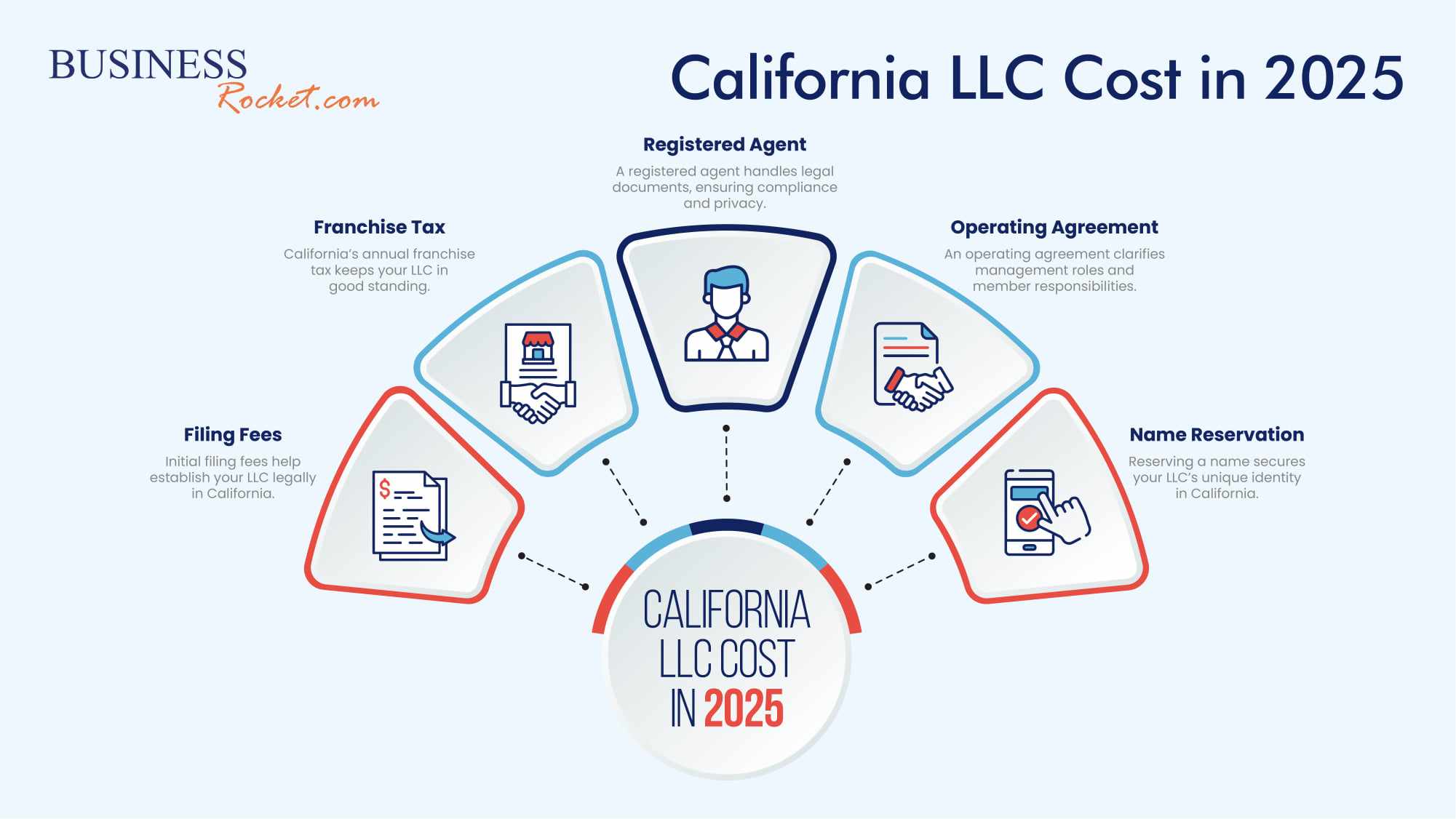
The California Secretary of State highlights that an Operating Agreement strengthens an LLC’s legitimacy in court. A Harvard Law Review study found that businesses with formal agreements face 40% fewer legal disputes. Understanding the California LLC cost is essential for budgeting, as clear internal rules like profit distribution and decision-making protect assets and streamline operations
Drafting an agreement early ensures long-term stability. It should include ownership structure, voting rights, tax obligations, and dissolution procedures. A structured LLC runs efficiently, minimizes risks, and remains compliant with California laws.
What is an LLC Operating Agreement?
An LLC Operating Agreement outlines ownership percentages, management roles, and financial policies. While not legally required in California, it safeguards members from conflicts and ensures smooth decision-making. Over 4.1 million LLCs in the U.S. rely on this document for clarity and control.
LLCs with structured agreements encounter 30% fewer tax-related issues, according to the IRS Tax Compliance Report. A well-drafted agreement prevents disputes by defining voting rights, profit distribution methods, member withdrawal terms, and dissolution procedures. Without one, California default laws may govern your LLC, potentially overriding your business intentions.
LLC Operating Agreement vs. Bylaws vs. Partnership Agreement
Feature | LLC Operating Agreement | Bylaws (Corporations) | Partnership Agreement |
|---|---|---|---|
Purpose | Internal framework for an LLC | Governs corporate structure | Defines partner roles & profit sharing |
Legal Requirement? | Optional but recommended | Mandatory for corporations | Not required but advisable |
Key Focus | Member responsibilities, profits, dispute handling | Board structure, voting, corporate policies | Roles, financial distribution, exit strategies |
Applies To | LLC members | Shareholders & board of directors | Business partners |
Flexibility | Highly customizable | Must follow corporate regulations | Set by partners, adaptable |
Risk Protection | Shields owners from conflicts & liability | Ensures corporate compliance | Reduces legal disputes |
An LLC Operating Agreement provides flexibility and liability protection—unlike corporate bylaws, which are rigid. Unlike a partnership agreement, it shields members from personal liability. Having a well-defined agreement helps businesses maintain control, prevent disputes, and ensure financial stability.
Is an Operating Agreement Required for a California LLC?
California law does not require an LLC operating agreement, but having one prevents legal and financial risks. Without it, your business defaults to California Corporations Code §17701.10, which may not suit your needs. A Small Business Administration (SBA) report found that unclear agreements contribute to over 70% of partnership disputes.
Why an Operating Agreement Matters:
Prevents disputes: Defines ownership, roles, and responsibilities.
Protects limited liability status: Helps shield personal assets.
Avoids default state laws: Gives you full control over operations.
Easier to enforce in court: Written agreements hold stronger legal weight.
A Harvard Law Review analysis highlights that courts are more likely to uphold LLC agreements when they are documented. The California Secretary of State also emphasizes that LLC compliance laws help businesses avoid legal complications
Quick Tip: “Without an agreement, state laws will control your LLC, which may not align with your business goals.”
A well-drafted agreement strengthens LLC compliance and protects your business. Take charge, define your terms instead of relying on state defaults.
Key Components of an LLC Operating Agreement
A well-structured operating agreement is the backbone of your California LLC. It safeguards your business by defining ownership, management, and financial terms. Without it, state default laws dictate operations, which may not align with your vision. As stated by the California Secretary of State, a customized agreement ensures flexibility and legal protection.
Basic Business Information
Your agreement must include your LLC name, registered agent, and address. This information ensures compliance with the Franchise Tax Board and simplifies legal communication. A report from Harvard Business Review highlights that clear documentation reduces disputes.
Ownership Structure & Membership Details
Define LLC members, ownership shares, and profit distribution. Whether it’s a single-member or multi-member LLC, clarity prevents future conflicts. A Forbes study reveals that well-defined roles improve financial stability.
Management Structure: Member-Managed vs. Manager-Managed
Your LLC can be member-managed or manager-managed, impacting decision-making. Operational control depends on this choice, influencing day-to-day business. The IRS mentions that structuring management early avoids tax complications.
Voting Rights & Decision-Making Rules
Establish a voting structure, decision authority, and resolution process. This keeps disputes in check and promotes fair governance. As per Cornell Law School, strong voting rules enhance business efficiency.
Profit Distribution & Financial Guidelines
Detailed profit-sharing, financial responsibilities, and reinvestment strategies. This ensures members understand their rights and tax obligations. The Franchise Tax Board advises formal agreements to prevent tax miscalculations.
Dissolution & Exit Strategy
Plan for LLC dissolution, member exits, and liability settlements. Business closure is smoother with a clear process. The California Secretary of State recommends formal exit plans to avoid legal roadblocks.
A well-drafted LLC Operating Agreement keeps your business secure and structured. By outlining key elements, you avoid conflicts and legal issues. A strong agreement means a strong foundation—giving your LLC long-term stability.
Step-by-Step Guide to Creating a California LLC Operating Agreement
Over 90% of small businesses face legal disputes due to unclear agreements. A California LLC Operating Agreement protects your business by defining ownership, management, and financial terms. While not legally required, it strengthens liability protection and minimizes internal conflicts. As stated by the California Secretary of State, businesses with structured agreements have higher compliance rates and reduced legal risks.
How to Draft an LLC Operating Agreement (With Template)
A well-drafted LLC Operating Agreement ensures smooth operations and prevents disputes. Whether using a legal template or drafting a custom version, focus on clarity and compliance.
1-Define Ownership & Roles:
List all members, their responsibilities, and voting power.
Every LLC must establish who owns what and who manages operations. Some LLCs assign management to members, while others appoint external managers.
2- Outline Profit & Loss Distribution:
Specify percentage splits, capital contributions, or reinvestment plans.
Profits can be divided equally or based on investment percentages. Clearly defining these terms prevents financial conflicts later.
3- Set Voting Rights & Decision-Making:
Establish authority for financial and operational decisions.
Some LLCs allow one vote per member, while others base voting power on ownership stakes. Define how major decisions—like adding new members—will be handled.
4- Include Dissolution Terms:
Detail exit strategies, buyouts, and asset distribution.
If an LLC dissolves, assets must be distributed fairly. Planning ahead ensures a smooth exit process without legal disputes.
A study from Harvard Business Review found that businesses with clearly defined agreements experience fewer disputes. Proper documentation protects all members and enhances business stability.
Notarization & Legal Validity of the Operating Agreement
California does not require LLC agreements to be notarized, but notarization strengthens legal security. Adding an attorney review further ensures compliance with state laws.
1- Notarization Adds Legitimacy:
Provides proof of signing but doesn’t guarantee enforceability.
A notarized agreement helps if a dispute arises, ensuring that all members signed voluntarily. Courts consider notarized documents stronger evidence in case of legal conflicts.
2- Attorney Review Ensures Compliance
A business lawyer can confirm alignment with California state laws.
Legal professionals verify that agreements follow state regulations, reducing the risk of contract disputes or invalid clauses.
3- State Recognition Matters
A well-structured agreement includes clear financial terms, dispute resolution clauses, and compliance measures.
Courts recognize agreements with detailed financial policies, member obligations, and clear dispute resolution terms as legally binding.
A notarized agreement helps resolve disputes efficiently by providing undeniable proof that all parties signed voluntarily.
For example, if a member contests a decision, a notarized document serves as legal evidence of their prior consent. In California, a Notary Public can authenticate signatures, adding credibility, but the agreement’s content ultimately determines its legal standing. Secure storage ensures accessibility when needed.
California LLC Operating Agreement for Single-Member vs. Multi-Member LLCs
A California LLC Operating Agreement isn’t just a formality, it’s the foundation of a strong business structure. The California Secretary of State doesn’t mandate it, but has one lock in liability protection and smooth operations. The IRS automatically classifies single-member LLCs as disregarded entities, while multi-member LLCs default to a partnership unless they elect corporate taxation. With a clear agreement, business finances stay separate, shielding owners from personal liability.
Single-Member LLC Operating Agreement
A solo LLC runs smoother with a well-crafted agreement. It legally separated personal and business finances, preventing courts from ignoring the LLC structure. Details like profit distribution, record-keeping, and succession planning keep everything clean and professional. Without this, the line between personal and business assets blurs, putting legal protection at risk.
For Example: In Smith v. California Tax Board , freelancer Jessica Smith lost her LLC’s liability protection because she failed to maintain a clear separation of funds. Without an operating agreement, the court ruled her LLC a “disregarded entity,” making her personally liable for business debts and back taxes.
Multi-Member LLC Operating Agreement
A multi-member LLC operating agreement sets the foundation for smooth business operations. California Partnership Laws emphasize defining ownership stakes, financial responsibilities, and dispute resolution to prevent disputes. A structured plan clarifies each member’s role, ensures fair profit distribution, and keeps conflicts from escalating into legal battles.
Example: Jake and Olivia co-run a fitness brand. Their agreement assigns 70% ownership to Jake and 30% to Olivia, with clear guidelines for revenue sharing and decision-making. If disagreements arise, mediation comes first—keeping legal battles off the table.
Comparison Table: Single-Member vs. Multi-Member LLC Operating Agreements
Feature | Single-Member LLC | Multi-Member LLC |
|---|---|---|
Ownership | One owner | Two or more members |
Management | Full control by owner | Defined management roles |
Tax Classification | Defaults to sole proprietorship | Defaults to partnership unless elected otherwise |
Liability Protection | Shields personal assets | Defines liability for each member |
Profit Distribution | All profits go to the owner | Must specify member shares |
Voting & Decision-Making | Owner makes all decisions | Voting rights should be outlined |
Dispute Resolution | Not needed for a single owner | Crucial to prevent internal conflicts |
Financial Obligations | Simpler record-keeping | Requires structured financial management |
A strong operating agreement isn’t just legal paperwork—it’s an essential safeguard. It proves the LLC operates as a separate entity, reinforcing liability protection. Without it, the business risks being seen as an extension of its owners, leaving personal assets exposed.
Legal Considerations & Compliance in California
Operating agreements must align with California laws to ensure legal security. The California Corporations Code outlines key requirements, and the Franchise Tax Board enforces tax regulations. A study by the SBA found that 74% of LLCs with structured agreements faced fewer disputes.
A report from Harvard Law Review highlights how California LLC statutes protect members’ rights. Clear corporate governance strengthens enforceability in court. Following business law compliance guidelines helps avoid legal risks.
State Laws Governing LLC Operating Agreements
California LLC Operating Agreements follow strict legal standards. The California Corporations Code ensures agreements hold up in court. According to the Franchise Tax Board, compliance reduces tax risks and legal disputes.
Business laws dictate how LLCs handle internal operations.
California LLC regulations require agreements to state ownership percentages and dispute resolution methods clearly.
A study from Harvard Law Review highlights that business law compliance strengthens asset protection. The California LLC statutes specify that well-drafted agreements help in corporate governance and conflict resolution.
Tips: To stay compliant, update your agreement as laws evolve. Business laws change, so regular reviews keep your LLC secure. Smart planning ensures long-term protection and smooth operations.
Filing & Storing Your Operating Agreement
Keeping business records organized protects your LLC. California doesn’t require filing agreements, but safe document storage prevents legal issues. Experts recommend keeping a signed copy in multiple secure locations.
Record-keeping procedures suggest keeping digital copies with timestamped versions for tracking updates.
State filing requirements vary, but storing agreements with registered agents ensures accessibility during legal audits.
A study from Stanford Business School shows that legal documentation best practices reduce compliance risks. Proper storage ensures business continuity in disputes or audits.
Tips: Use document management protocols like cloud backups for accessibility and physical safes for added security. Cloud storage protects against physical damage, while safes prevent cyber risks. A well-stored agreement safeguards your business against future challenges.
California LLC Fees & Taxation
Every LLC in California must follow state tax laws to stay compliant. The Franchise Tax Board charges an $800 annual franchise tax, and businesses earning over $250,000 must pay an additional LLC fee. Other obligations include sales tax for taxable goods and payroll tax for employees.
Franchise Tax: $800 minimum, due annually, regardless of income.
Revenue-Based LLC Fee: Starts at $900 for earnings above $250,000.
Sales Tax: Required if selling taxable goods/services (file with the CDFA).
Payroll Tax: Applies if hiring employees (register with the EDD).
Timely payments help businesses avoid penalties and maintain good standing. The California Department of Tax and Fee Administration emphasizes proper tax management as key to long-term success.
EIN Requirements for California LLCs
An EIN (Employer Identification Number) is necessary for multi-member LLCs and beneficial for single-member LLCs choosing S-Corp status or hiring employees. The IRS requires it for payroll, tax filings, and business banking.
Single-member LLCs: Not required unless hiring or electing S-Corp status.
Multi-member LLCs: Always required for tax compliance.
How to Obtain an EIN
Apply through the IRS website using Form SS-4 (free process).
Submit the application online, by mail, fax, or phone (online is fastest).
Receive the EIN immediately (online) or within four weeks (mail/fax).
LLC Type | EIN Required? | Reason |
|---|---|---|
Single-Member | No (unless hiring or electing corporate tax status) | Useful for banking |
Multi-Member | Yes | IRS & tax compliance |
A report from Harvard Business Review highlights that obtaining an EIN early simplifies tax reporting and business banking. It also enhances business credibility with banks and vendors.
Final Thoughts
A California LLC Operating Agreement isn’t just paperwork; it’s your business’s safety net. While not required by law, it protects your structure, prevents conflicts, and keeps operations smooth. Without it, state rules take over, and that might not align with your vision.
This agreement clearly defines ownership, roles, voting rights, and financial policies, giving your LLC legal strength and liability protection. Whether you’re solo or have partners, a well-crafted agreement keeps everything in check.
Lock in your business’s future. Draft your Operating Agreement now to secure your assets, set clear rules, and stay in control.
FAQ’S
Do I Need an Operating Agreement for My California LLC?
Yes. While not legally required, it’s highly recommended. It keeps things clear—who owns what, who makes decisions, and how profits are split. Without it, state laws decide for you.
Can I Write My Own Operating Agreement?
Yes, but be careful. It needs to follow the California LLC laws and cover all the essentials. A good legal template or a quick review from a lawyer can save you trouble.
Can I Change My Operating Agreement Later?
Absolutely. Businesses evolve, and so should your agreement. Just make sure everyone signs off on changes, so it stays legally binding.
What’s the Difference Between an Operating Agreement & Articles of Organization?
Think of the Articles of Organization as your LLC’s birth certificate—it gets you registered. The Operating Agreement? That’s your rulebook for how the business actually runs.
Start & Grow
Your Dream Business
Join our growing BusinessRocket Family
- Trustpilot
4.9 Rating 1100+ Reviews
Featured Posts
 Texas vs Delaware LLC: Key Differences (2026) October 7, 2026 - Business Corner » LLC Operating Agreements in CaliforniaTexas vs Delaware LLC (2026): Which State Is Better for Your Business? Choose Delaware if you are raising venture capital or want the Court of Chancery. Choose Texas if you run an operating business and want no state income tax. Texas costs $300 to form with no annual …
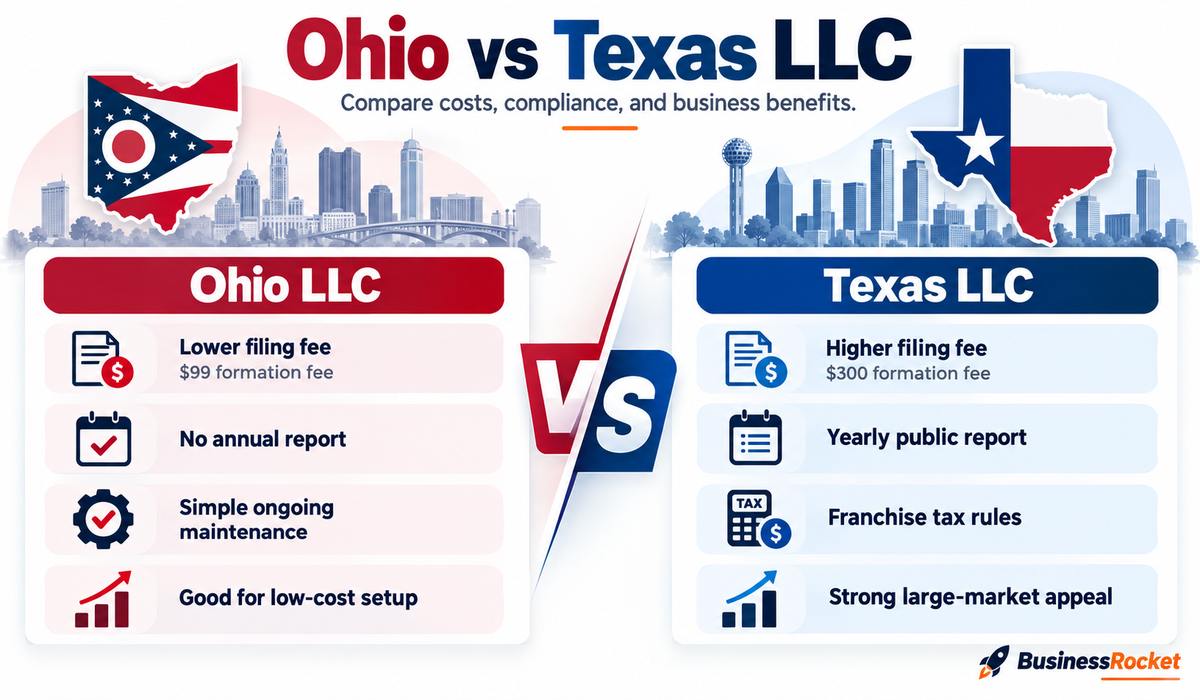 Texas vs Ohio LLC October 3, 2026 - Business Corner » LLC Operating Agreements in CaliforniaTexas vs Ohio LLC: Costs, Taxes, and Which State to Choose An Ohio LLC has a $99 formation fee and no annual report fee. A Texas LLC has a $300 formation fee and requires a Public Information Report each year. Start Your Business Today REGISTER AN LLC LLC …
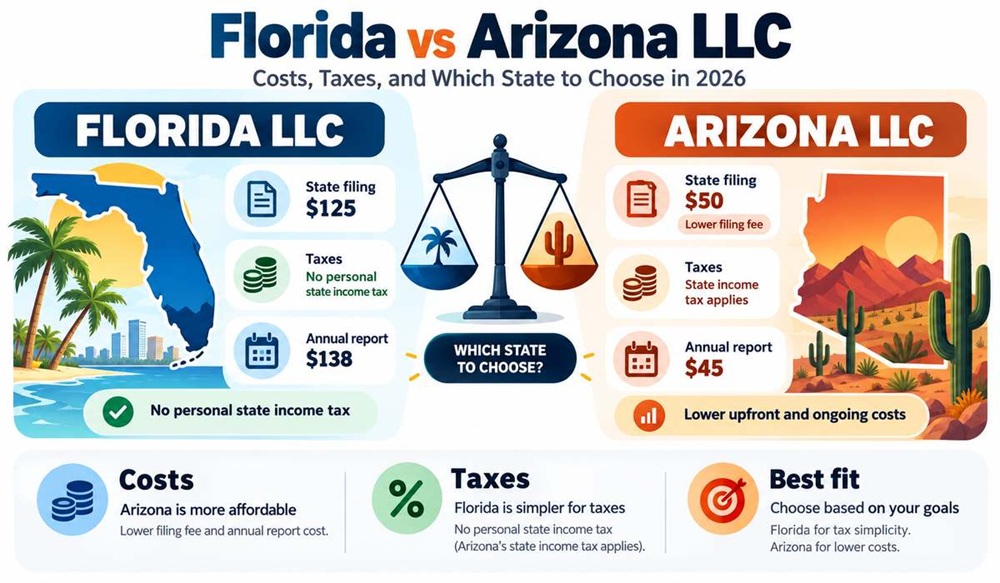 Florida vs Arizona LLC – What’s the Difference September 26, 2026 - Business Corner » LLC Operating Agreements in CaliforniaFlorida vs Arizona LLC: Fees & Tax Benefits Arizona offers a cheap $50 filing and $0 annual reports, while Florida has zero personal income tax. Pick the best state for your LLC fees and tax benefits. Start Your LLC Today Trustpilot Register Your Business A Florida LLC makes …