California Business Taxes: What You Need to Know
California’s business tax system is managed by the Franchise Tax Board for income taxes and the CDTFA for sales and excise taxes.
For businesses, staying compliant isn’t just about avoiding penalties; it’s about smart financial management.
Not all businesses pay taxes the same way. Corporations face an 8.84% income tax, while LLCs pay a minimum franchise tax of $800. If a business sells goods, it must collect sales tax through CDFA. And for those with employees, payroll taxes come into play. Understanding these obligations helps businesses plan ahead and avoid financial surprises.
Tax compliance offers more than legal protection to organizations as it establishes strong financial stability. Research conducted by the IRS demonstrates that businesses which effectively handle their taxation responsibilities will prove more sturdy throughout time.
The tax revenue generated by California yearly exceeds $300 billion to finance critical state infrastructure and services alongside important statewide programs. The California tax authorities FTB and CDTFA provide resourceful digital platforms which simplify tax filing procedures for businesses.
Recent Tax Law Changes
Staying ahead of tax law changes can mean the difference between paying more than necessary and keeping more money in the business. California and federal tax laws have evolved, bringing new opportunities and obligations. Here’s a closer look.
California Tax Updates
First-Year Tax Break for LLCs
The cost of an LLC in California just got easier for new businesses. Thanks to the First-Year Tax Break for LLCs, the state is waiving the $800 franchise tax in the first year. This exemption, available through 2026, allows startups to reinvest in growth instead of upfront tax costs. According to the California Franchise Tax Board, thousands of businesses have already benefited from this policy.
Expanded Deductions for Small Businesses
Lowering taxable income just got easier. California has broadened small business deductions, reducing overall tax burdens. A 2023 analysis by the Tax Foundation highlights that these expanded deductions have helped businesses channel funds into hiring and expansion.
Sales Tax for Digital Products & Services
Selling software, subscriptions, or other digital goods? The CDTFA has updated its policies on how sales tax applies to these products. Businesses in the digital space should review the latest guidelines to ensure compliance and avoid unexpected tax liabilities.
Tax Relief for Disaster-Affected Businesses
Businesses in wildfire-prone areas can access extended tax deadlines and special credits. Reports from the California Department of Finance show that these measures have provided significant financial relief to businesses recovering from natural disasters.
Federal Tax Brackets for 2025
For business owners reporting income as pass-through entities (LLCs, S Corps, sole proprietors), federal tax brackets impact personal tax obligations.
Tax Rate | Single Filers | Married (Joint Filers) |
|---|---|---|
37% | Above $626,350 | Above $751,600 |
35% | Above $250,525 | Above $501,050 |
32% | Above $197,300 | Above $394,600 |
24% | Above $103,350 | Above $206,700 |
22% | Above $48,475 | Above $96,950 |
12% | Above $11,925 | Above $23,850 |
10% | $11,925 or less | $23,850 or less |
Federal tax policies play a big role in business decision-making. A report from the Congressional Budget Office suggests that changes in tax brackets influence investment and hiring strategies, particularly for small business owners.
California vs. Federal Tax Updates: A Quick Comparison
Tax Category | California (2023–2025) | Federal (2025) |
|---|---|---|
LLC Tax | First-year exemption ($0 tax) | No federal exemption |
Corporate Tax | 8.84% (No changes) | 21% flat tax rate |
Pass-Through Income | Subject to state tax | Taxed at federal brackets |
Digital Sales Tax | Clarified taxation | No federal digital tax |
Disaster Relief | Tax extensions & credits | No major changes |
Both state and federal tax updates have implications for financial planning. The LLC tax exemption in California offers immediate savings, while federal tax brackets shape long-term tax liabilities.
Industry-Specific Tax Impacts
Tax changes affect industries differently. Here’s how key sectors are impacted.
Tech & Digital Businesses
The CDTFA has refined tax policies on software, subscriptions, and other digital products.
The federal R&D Tax Credit remains available for startups investing in innovation, as noted by the U.S. Small Business Administration.
Why It Matters: Businesses selling digital products should reassess tax obligations and take advantage of available credits.
Retail & E-Commerce
California’s economic nexus law requires out-of-state retailers to collect sales tax if they exceed certain sales thresholds.
Federal tax brackets influence small business owners filing as sole proprietors or LLCs.
Why It Matters: E-commerce businesses selling to California customers should ensure they have the correct permits under CDTFA regulations.
Real Estate & Property Management
The 1031 Exchange remains a federal tax-deferral option for real estate investors.
California’s property tax rules remain unchanged, but local assessments may increase.
Why It Matters: Investors should monitor state and federal capital gains tax policies when planning property transactions.
Small Business Owners (LLCs & S Corps)
California continues its first-year LLC tax relief through 2026.
Pass-through income remains subject to federal tax brackets, highlighting the need for strategic tax planning.
Why It Matters: Business owner
Business Taxes by Entity Type
Taxes can make or break a business. In California, what you pay depends on how your business is structured. A C Corp, S Corp, LLC, or sole proprietorship—each comes with its own tax rules, rates, and costs. Pick the right one, and you could save thousands. Choose wrong? You might pay more than you need to.
Below is a breakdown of California’s business tax structure by entity type, outlining key tax rates, obligations, and benefits for each business model. Understanding these differences helps business owners make informed financial decisions.
C Corporation Taxes in California
California imposes an 8.84% corporate tax on C Corporations, plus a 6.65% Alternative Minimum Tax (AMT) for high earners. Profits face double taxation—once at the corporate level and again as dividends to shareholders.
The 8.84% corporate tax rate applies to net income.
AMT of 6.65% affects large corporations.
Double taxation risk—profits taxed twice.
A study from the Tax Foundation highlights how California’s corporate tax rate is among the highest in the U.S. Companies often seek tax planning strategies to minimize liability.
Many businesses explore state comparisons before incorporation. In states like Nevada or Texas, corporate taxes are lower, making location a key factor in tax efficiency.
LLC Franchise Tax & Gross Receipts Tax
All LLCs in California must pay a $800 minimum franchise tax, even if they have no income. On top of that, a gross receipts tax applies, scaling with revenue. Some startups qualify for a first-year exemption.
$800 minimum tax, except for the first-year waiver.
Gross receipts tax applies to businesses earning over $250,000.
Pass-through taxation means profits go directly to owners.
According to the California Franchise Tax Board (FTB), LLCs with higher revenues face increasing tax burdens. A tiered tax structure ensures larger businesses contribute more.
For companies with low overhead and high profits, an S Corporation may be a better option. Careful entity selection can lead to significant tax savings.
S Corporation Taxes & Pass-Through Benefits
S Corporations avoid double taxation by passing profits directly to owners. However, they must pay a 1.5% state tax on net income. Many high-income business owners opt for this structure to reduce tax liability.
1.5% California state tax on net income.
Pass-through taxation eliminates corporate-level taxes.
Lower overall tax burden compared to a C Corporation.
A report from the IRS confirms that S Corps often provides tax savings over LLCs for businesses with high profits. Owners can reduce self-employment taxes by paying themselves a lower salary.
For entrepreneurs looking to maximize earnings, an S Corporation structure often provides the best balance of liability protection and tax efficiency.
Sole Proprietors & Partnerships (Self-Employment Taxes)
Sole proprietors and partnerships pay personal income tax rates ranging from 1% to 12.3%. They also owe a 15.3% self-employment tax, covering Social Security and Medicare contributions.
California income tax: 1%–12.3%, based on earnings.
Self-employment tax: 15.3%, covering federal obligations.
Tax deductions reduce taxable income for freelancers.
The Small Business Administration (SBA) advises self-employed individuals to track expenses and maximize deductions. Common write-offs include home office costs, equipment, and travel expenses.
Freelancers and independent contractors should set aside funds for estimated taxes. Strategic planning helps avoid tax surprises while maximizing deductions.
Business Tax Rates & Filing Requirements
California’s business tax rates vary based on entity type. Corporations pay a flat 8.84%, while S-corporations owe 1.5% on net income. The business taxation system for LLCs requires them to submit fees based on gross receipts and sole proprietors must declare their income through personal tax returns. State taxes fall under the oversight of the Franchise Tax Board but California Department of Tax and Fee Administration handles sales and use taxes in the state.
Key Filing Requirements
Sole proprietors & LLCs file with FTB annually.
Corporations & S-corps must pay a minimum $800 franchise tax.
Sales tax filers register with CDTFA and file quarterly.
Filing correctly ensures compliance and prevents penalties. The IRS and California agencies require businesses to maintain accurate records. FTB guidelines recommend keeping tax documents for at least four years to verify income and deductions.
Filing Deadlines & Compliance
Business taxes in California follow strict deadlines. Corporate tax returns are due April 15, while LLCs & partnerships file by March 15. Estimated quarterly payments are mandatory for businesses with significant earnings. Late filings result in penalties and accruing interest from the FTB & CDTFA.
Avoid Penalties & Stay Compliant
Quarterly payments apply to self-employed individuals.
Sales tax must be remitted by due dates to avoid fines.
FTB late penalties start at 5% and increase monthly.
A Stanford study highlights that early tax planning reduces errors and enhances financial stability. Businesses benefit from automated tax software and professional consultations to stay compliant. Following state regulations helps secure tax advantages and financial growth.
Business Tax Credits, Deductions & Smart Tax-Saving Strategies
California businesses can unlock major tax savings by leveraging deductions and credits designed to promote growth. The R&D Tax Credit helps companies innovate, while the California Competes Tax Credit rewards businesses expanding in the state. Companies hiring employees may qualify for the Small Business Hiring Credit, offering direct tax relief. According to the IRS, businesses claimed over $18 billion in R&D credits in 2022, proving its impact on economic growth.
Maximize Your Tax Savings in 2025
Businesses should take full advantage of Section 179, allowing immediate deductions on equipment purchases. A Harvard Business Review study shows that small businesses investing in technology see a 20% productivity boost within the first year. Remote workers can also claim the Home Office Deduction, reducing taxable income. Tracking business mileage is key, rideshare drivers have saved up to $5,000 annually by using the IRS Business Mileage Deduction.
Key Tax Credits & Deductions
R&D Tax Credit: Supports product innovation and growth.
California Competes Tax Credit: Encourages business expansion.
Small Business Hiring Credit: Offsets new employee costs.
Green Energy Incentives: Lowers expenses for sustainability efforts.
Section 179 Deduction: Allows instant equipment write-offs.
Home Office Deduction: Helps reduce remote work expenses.
Business Mileage Deduction: Saves on vehicle-related costs.
Real-World Example: A San Francisco-based tech startup saved $250,000 in taxes in 2023 by combining the R&D Tax Credit with Section 179 deductions, allowing them to reinvest in AI development (Silicon Valley Business Journal, 2023).
Top Tax-Saving Strategies for Small Businesses
New LLCs should claim the First-Year LLC Tax Exemption, skipping the $800 franchise tax. Businesses should maximize Section 179 before the December 31 deadline for full deductions. Companies hiring underrepresented employees can leverage the Work Opportunity Tax Credit (WOTC) for direct savings.
Checklist: Common Deductible Expenses for Small Businesses
Tracking deductible expenses ensures businesses get the most out of their tax return. These expenses should be recorded year-round for accurate reporting:
Business travel & meals – Flights, lodging, and client dinners may qualify.
Software subscriptions – CRM, accounting software, and cloud storage are deductible.
Employee salaries & benefits – Payroll expenses, insurance, and retirement plans.
Professional services – Legal, tax, and consulting fees.
Advertising & marketing costs – Social media ads, SEO services, and branding.
A study from the University of California found that organized financial records reduce tax filing errors by 30%, making compliance easier and maximizing deductions.
Tip: Using accounting software or hiring a CPA can make tax filing much easier
Future Tax Trends & Predictions
California’s tax landscape is constantly evolving, and businesses must stay ahead of upcoming tax changes to remain compliant and maximize savings. In 2025, potential corporate tax rate adjustments, expanded deductions for green investments, and new digital taxation rules could significantly impact businesses.
Key Trends to Watch
California Tax Reform – Lawmakers are discussing potential business tax restructuring, which could affect deductions and compliance requirements.
Tax Policy Shifts for Digital Goods & SaaS – The CDTFA may introduce stricter regulations on digital product taxation, impacting businesses that sell software or online services.
Incentives for Sustainable Businesses – More tax breaks are expected for green energy adoption, encouraging businesses to invest in solar energy, EV fleets, and carbon offset programs.
Changes in Business Property Tax – Proposition 13 modifications may increase property tax liabilities for commercial real estate owners.
Federal vs. State Tax Disparities – Businesses operating across multiple states should prepare for varying tax treatments on income and deductions.
Tip: Keeping track of California Franchise Tax Board (FTB) and IRS announcements can help businesses plan for tax policy changes.
Case Study: Tax Reform & a Tech Startup
A San Francisco SaaS company faced unexpected costs after new digital tax rules. By leveraging the R&D Tax Credit and optimizing deductions, they saved $50,000.
So, the lesson is proactive tax planning prevents costly surprises.
Conclusion
California businesses can save thousands with tax planning and smart financial management. A recent IRS report shows that 85% of small businesses benefit from using tax software to streamline filings and reduce errors. Automating compliance cuts audit risks by 30%, ensuring smooth operations.
A study from Stanford University highlights how hiring a CPA improves cash flow and lowers tax liability. Research from the Tax Foundation shows that businesses using tax automation see a 40% boost in efficiency. These strategies keep companies ahead of changing tax laws.
Now’s the time to act. Consult a tax expert for personalized savings. Use automated tax software to stay compliant effortlessly. Smart tax planning today means bigger profits tomorrow.
Start & Grow
Your Dream Business
Join our growing BusinessRocket Family
- Trustpilot
4.9 Rating 1100+ Reviews
Featured Posts
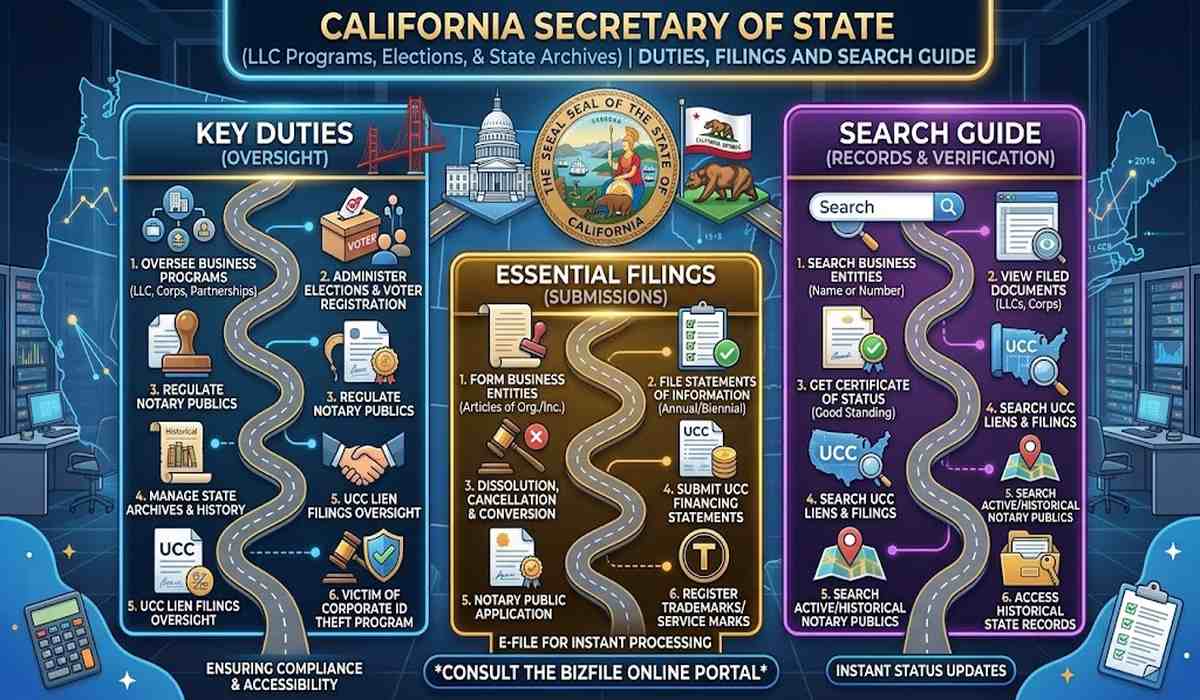 What Is the California Secretary of State? September 25, 2026 - Home » California Business Taxes: What You Need to KnowWhat Is the California Secretary of State The California Secretary of State is a statewide elected official and the name of the government office that keeps many of California’s public business and election records. Start Your Business Trustpilot Register Your Business Business owners use the office …
 California vs Nevada LLC September 25, 2026 - Home » California Business Taxes: What You Need to KnowCalifornia vs Nevada LLC: Costs, Taxes, and Which State to Choose California vs Nevada LLC is a comparison of two states’ formation costs, annual fees, and tax rules. Nevada has no individual state income tax, while California charges an $800 annual LLC tax. If your business …
 What Is E-commerce – How It Works in 2026 September 17, 2026 - Home » California Business Taxes: What You Need to KnowWhat Is E-commerce – Types and Benefits in 2026 Electronic commerce (e-commerce) is the buying and selling of goods, services, and digital products over the internet. The term covers all online commercial activity, from a local artist who sells crafts on a personal website to a …